Philip Harris: Why England's Smallest Vineyards may have the Brightest Future
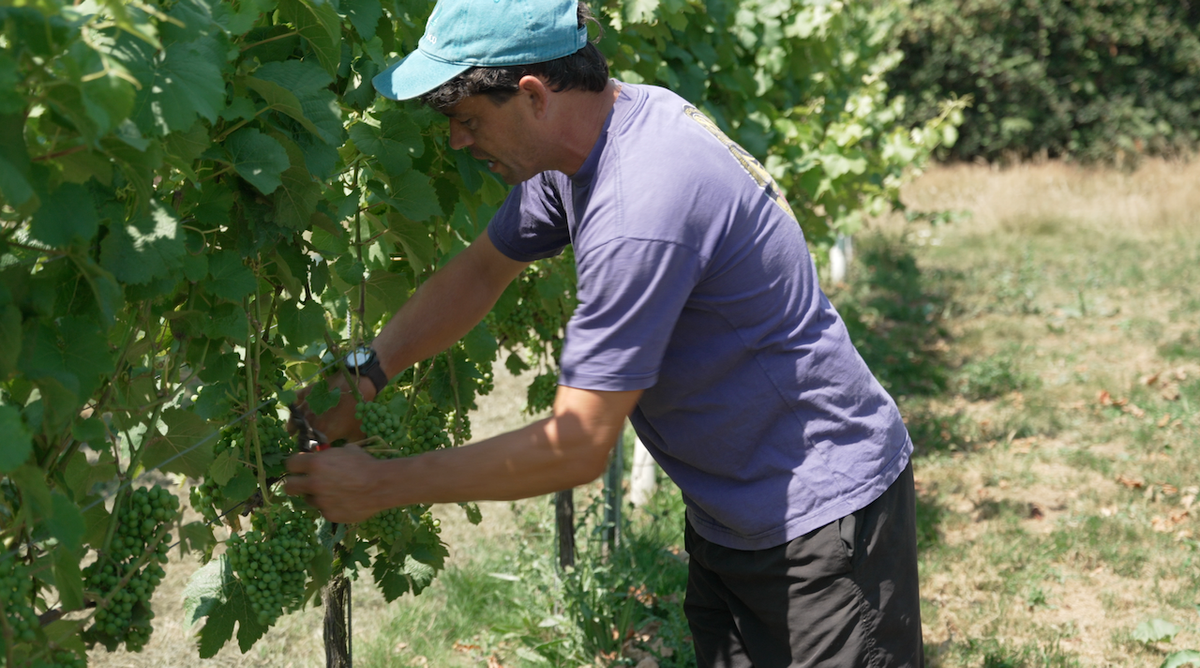
In the eighth instalment of my twelve-part Indie Farmer series, supported by the Lund Trust and the High Weald National Landscape, I visited Philip Harris at his organic vineyard near Hastings, East Sussex, to explore how a small-scale wine business is combining regenerative principles, biodiversity and thoughtful land stewardship to produce distinctive wines in the High Weald.
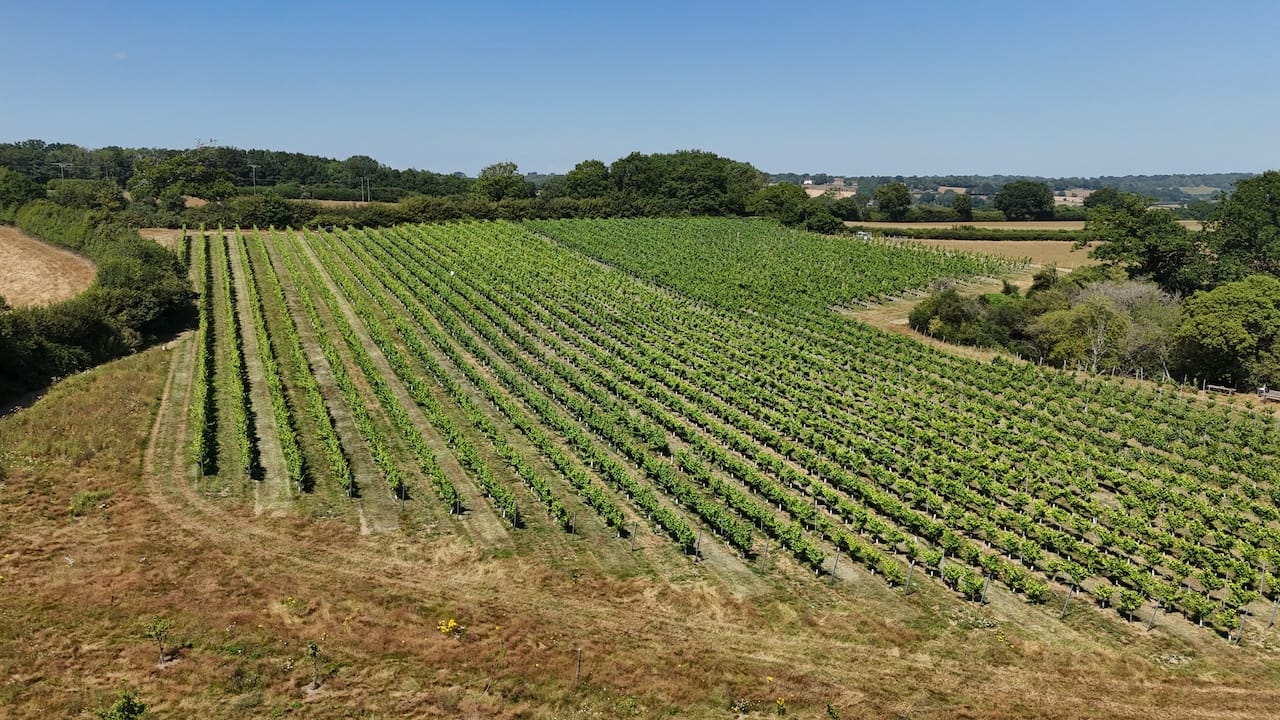
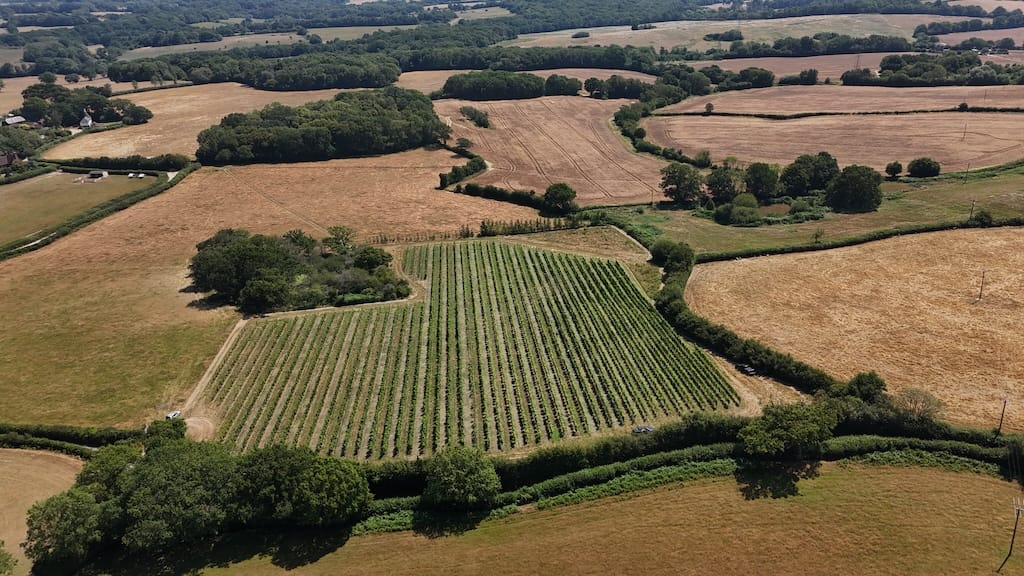
On a sunny south-facing slope on the edge of the High Weald National Landscape, rows of vines stretch across just two hectares of land. It's a modest vineyard by modern standards, yet for Philip Harris, that's precisely the point.
At a time when English wine is enjoying unprecedented attention and investment, Harris is quietly making the case that bigger isn't always better.
"We're producing more wine than we're selling in England," he says matter-of-factly. "There are some really big vineyards struggling."
For someone who has spent nearly two decades working in English viticulture, it's a refreshingly honest assessment of an industry often portrayed as one of British agriculture's great success stories.
From vegetables to vineyards
Harris didn't set out to become a winemaker. Originally studying Ancient Egyptian archaeology before working in North Wales, it was a job on an organic vegetable farm that first sparked his love of growing.
"Working with grapes was simply more interesting than fruit and veg," he laughs. "You don't have endless conversations about cabbages."
That curiosity led him to Davenport Vineyards in East Sussex, where he worked while studying viticulture at Plumpton College. In 2019, after years of saving, he planted his own vineyard on the outskirts of Westfield, near Doleham.
Seven years later, the vines are only just approaching maturity.
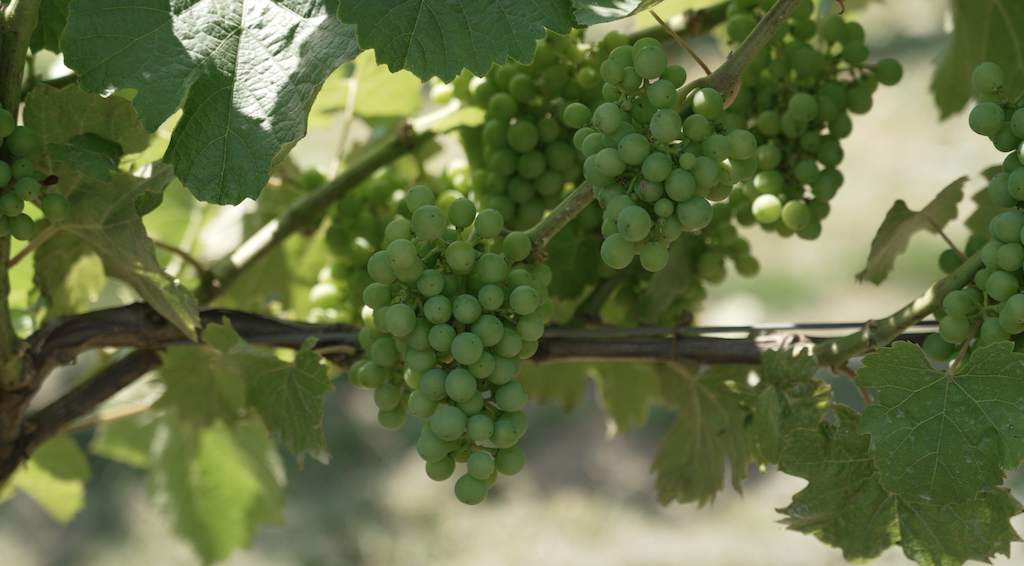
Unlike many farming enterprises, vineyards demand extraordinary patience. Harris produced just 350 bottles from his first harvest before gradually increasing production. At full capacity, he expects to produce around 7,000 bottles annually.
"You have to support yourself for those first five or six years," he explains. "That's probably the biggest challenge."
A different philosophy
While English wine has seen significant outside investment over the past decade, Harris has deliberately resisted the temptation to chase scale.
His ambition is not to build one of the country's biggest vineyards, but one that remains manageable, profitable and enjoyable.
"It's really important to me that I can do all the right jobs at the right time," he says. "If I grow too much, then suddenly I'm employing lots of people and spending more time managing than actually growing grapes."
That philosophy extends throughout the vineyard.
Certified organic from the outset, Harris has also adopted a no-dig approach, avoiding cultivation beneath the vines in favour of building healthier soils.
Instead of repeatedly disturbing the ground, he spreads around 80 to 90 tonnes of compost every year, sourced from local horse manure and arboricultural woodchip, gradually improving the structure of the heavy Wealden clay.
"The soil is changing every year," he says. "I used to feed just the vines, but now I'm trying to improve the whole vineyard."
The approach creates more work. Rather than relying on herbicides or cultivation, much of the vegetation management is done with a strimmer.
"It's a lot of strimming," he laughs. "One day there'll be a machine that does it properly."
Four-legged vineyard workers
One of Harris's favourite vineyard helpers isn't a machine at all.
Each winter, Southdown sheep are brought into the vineyard to graze beneath the vines, reducing grass growth before the new season begins.
They're carefully chosen too.
"The girls are great," he jokes. "Never let the boys in. Rams just back into the vines and snap them."
The sheep save hours of work while returning nutrients naturally to the soil, fitting neatly into Harris's wider belief that farming should work with natural processes wherever possible.
Like many organic growers, he still relies on sulphur and copper sprays to manage mildew, although he hopes alternatives become available in future. Alongside these, he brews his own nettle, horsetail and comfrey teas as natural plant feeds.
"They smell awful," he admits, "but they work."
Climate change brings opportunities — and risks
Few sectors have benefited from rising temperatures quite like English viticulture.
Warmer summers are producing consistently riper grapes and lower acidity, allowing growers to produce wines that would have been difficult to imagine a generation ago.
Yet Harris is quick to point out that climate change has also brought new problems.
"We lost around 35 per cent of the crop to frost this year."
Late spring frosts, once relatively uncommon, are becoming increasingly unpredictable. While some vineyards invest tens of thousands of pounds in frost candles, Harris has decided the economics simply don't stack up.
"It would have cost me about £15,000 to protect this vineyard for one frost event."
For a small independent business, that's a gamble he isn't prepared to take.
Why small might win
Perhaps Harris's most striking observation concerns the economics of English wine.
Conventional wisdom suggests larger vineyards should enjoy economies of scale. Harris isn't convinced.
"Once you scale up you've suddenly got marketing departments, sales teams and much bigger overheads."
His own business remains intentionally lean.
Selling directly to customers through cellar door sales, local wine merchants and independent restaurants allows him to retain far more of each bottle's value than supplying large retailers.
During a recent open day, visitors wandered through the vineyard before buying bottles directly from the source.
"I made about £550 just sitting here talking to people," he says.
For Harris, that direct relationship with customers is becoming just as valuable as the grapes themselves.
More than just wine
Despite producing natural wines, Harris is reluctant to become caught up in labels.
His wines are made with minimal intervention and very low sulphur additions, but he still wants them to taste clean, balanced and approachable.
"I want them to taste like wine."
He believes the rise of the natural wine movement has introduced a new generation of customers who care about local food, sustainable farming and the people producing it.
Many of those customers are younger than he expected.
"I've been really surprised how many young people are embracing it."
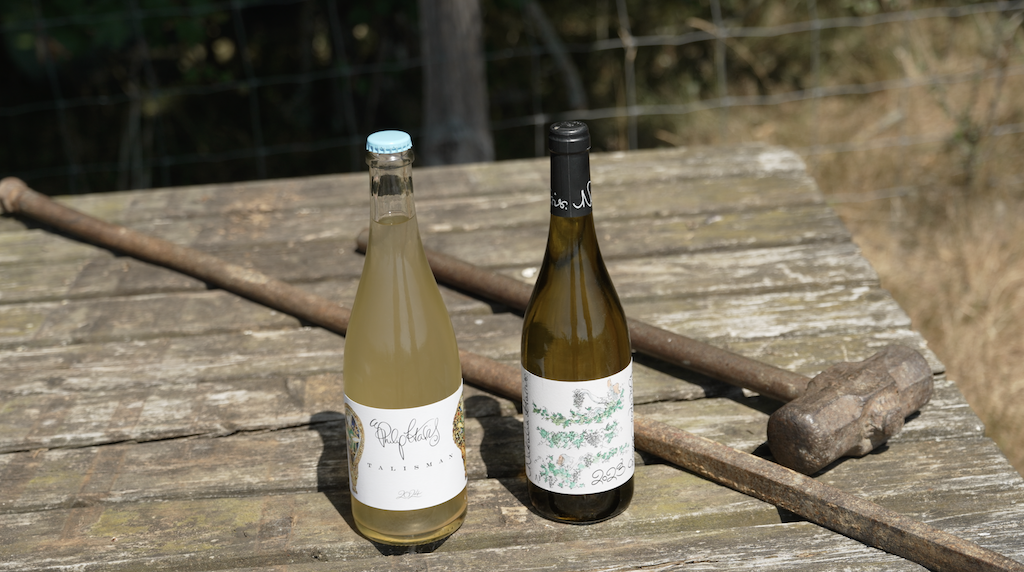
His own labels reflect that personal approach. One features artwork generously donated by celebrated illustrator Sir Quentin Blake after Harris's wife wrote to him during the Covid pandemic. Another incorporates drawings by members of his own family.
They're small touches that reinforce the vineyard's identity as a family business rather than a corporate brand.
Looking ahead
As the vineyard approaches full production, Harris isn't dreaming of hundreds more acres.
If demand continues to grow, he may plant another thousand vines.
No more.
"I want to be able to give every vine the attention it deserves."
For farmers considering diversifying into vineyards, his advice is equally grounded.
"Go and work in one first. Do a harvest. See if you actually enjoy the work."
Because, despite the romance surrounding English wine, Harris believes success still comes down to the same fundamentals as any other farming enterprise: patience, hard work and a genuine love of growing.
Standing among the vines on a warm July afternoon, it's difficult to argue with him.
In an industry often focused on expansion, Philip Harris is quietly proving there is another path - one built not on scale, but on craftsmanship, careful stewardship and knowing exactly how big is big enough.