How Livestock Farms Add Value in the High Weald
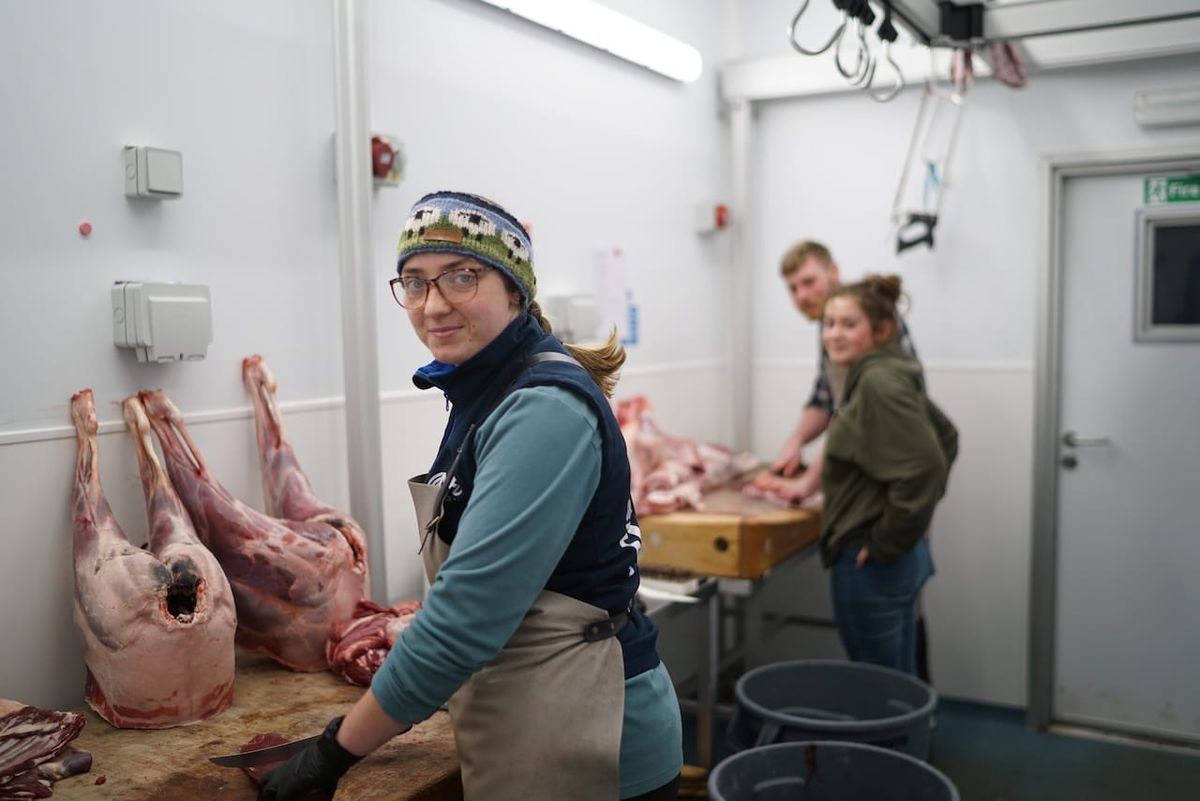
In the ninth instalment of my twelve-part Indie Farmer series, supported by the Lund Trust and the High Weald National Landscape, I visited Goodtrees Farm Butchers near Forest Row, East Sussex, to meet owner Ian Melluish and one of his butchers Josie Rollings to learn how they are building a business that reconnects livestock farming, local food and skilled butchery under one roof.
As more livestock farmers look beyond commodity markets, local butchers are becoming increasingly important partners in helping them sell direct, build their own brands and retain more of the value from what they produce.
Goodtrees Farm Butchers, located in the High Weald National Landscape near Edenbridge, is a good example. While the livestock remain central to the business, its success is built on what happens after the animals leave the field. Alongside rearing its own cattle, sheep and goats, the farm has developed a thriving butchery that now processes livestock for farmers across the South East.
For many producers, finding a skilled butcher and reliable access to an abattoir has become just as important as producing quality livestock.
It wasn't the business Ian Melluish expected to build when he bought Goodtrees Farm in 2014.
"We purchased the farm when it was a bit of a wreck," he says. "We've spent the last 12 years renovating it—putting in new fencing, roads and buildings while gradually developing the business alongside the farm."
Before moving into farming, Ian ran a chemical manufacturing and distribution company, travelling extensively around the world. Although the change in career was dramatic, he believes the same business principles still apply.
"I don't miss the corporate flying around the world," he says. "But many of the principles we applied there apply equally well to running a butchery."
The family's original plan was simple: rear their own livestock and sell meat boxes directly to local customers.
There was just one problem.
"We struggled finding a good abattoir and butcher."
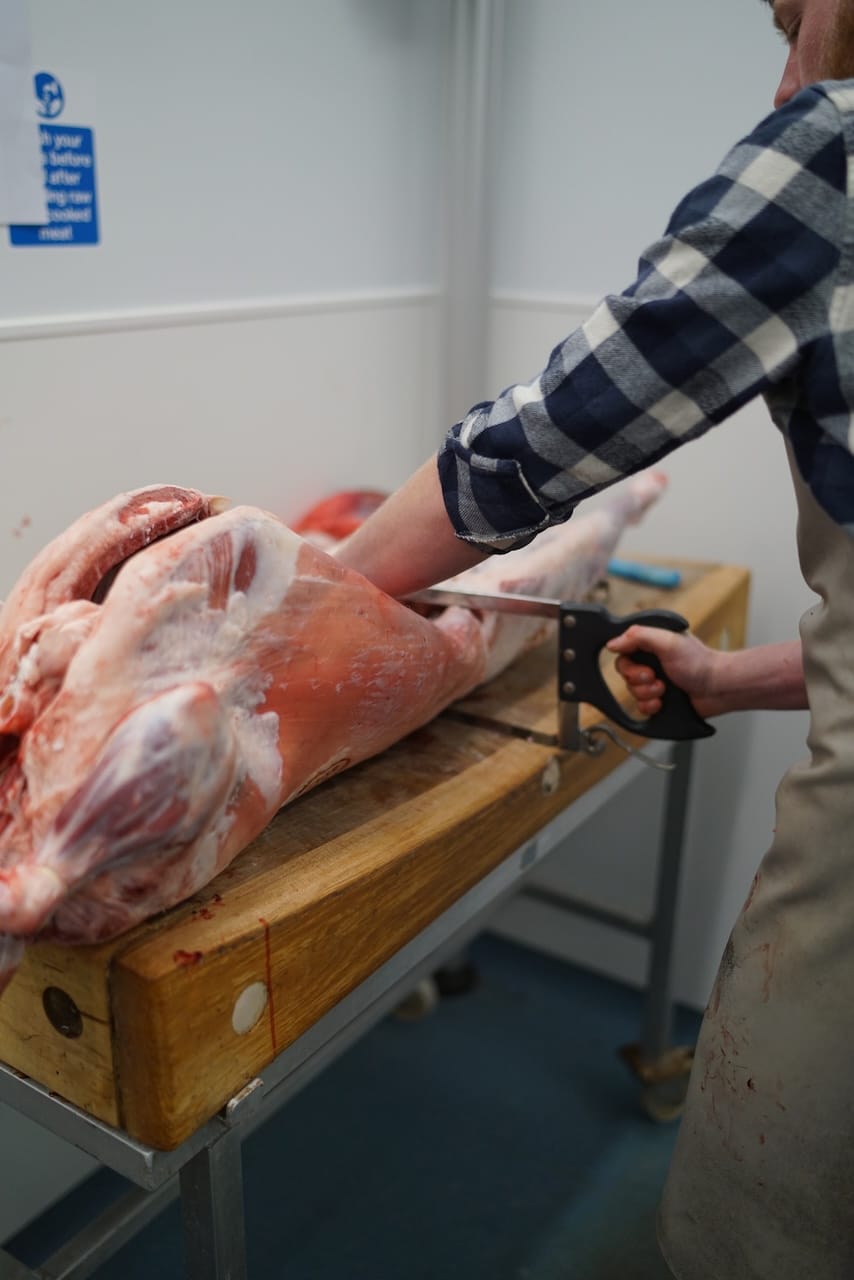
Rather than relying on outside processors, the family invested in their own butchery and employed an experienced butcher to process their livestock. Before long, neighbouring farmers were asking if they could do the same for them.
"Could you do ours as well?"
Demand quickly grew.
Today, Goodtrees employs four full-time butchers and processes beef, lamb, pork and poultry for farmers across the South East, alongside the farm's own livestock.
Helping Farmers Add Value
For Ian, the butchery is about far more than cutting meat. It is about helping farmers build profitable direct-selling businesses.
"If you've got good quality cattle, develop your own identity," he says. "Get your own logo. Get your own branding. We can present the meat professionally, vacuum pack it and prepare it exactly how your customers want it."
However, selling direct requires planning.
"When somebody brings us a finished beef animal they're going to get somewhere close to 200 kilograms of meat back," Ian explains. "You need to know where that's going before you slaughter it."
Having customers lined up before the animal goes to the abattoir is every bit as important as having freezer space.
Ian believes demand for local meat continues to grow.
"People increasingly want locally produced meat. They're interested in the breed, how the animal has been reared and where it's come from. It's no longer just about price."
That is something he sees every week at Blackheath Farmers' Market in south-east London.
"A lot of our customers can tell the difference between a Belted Galloway and a Sussex Wagyu cross," he says. "They're genuinely interested in what they're buying. We learn from them and they learn from us."
For farmers selling direct, those conversations help build trust as well as repeat business.
More Than Just a Butcher
For many smaller livestock farms, businesses like Goodtrees provide the knowledge and processing facilities needed to make direct selling commercially viable.
That support has become increasingly important as the number of local abattoirs has declined.
"I think the biggest issue is really around the abattoir," Ian says. "We've got some excellent local facilities, but capacity is limited."
Planning is therefore essential.
"You've got to work with the abattoir, work with your butcher and get everything aligned. If one part doesn't line up with the other, you have a problem."
Attention to detail continues once the carcass reaches the butchery.
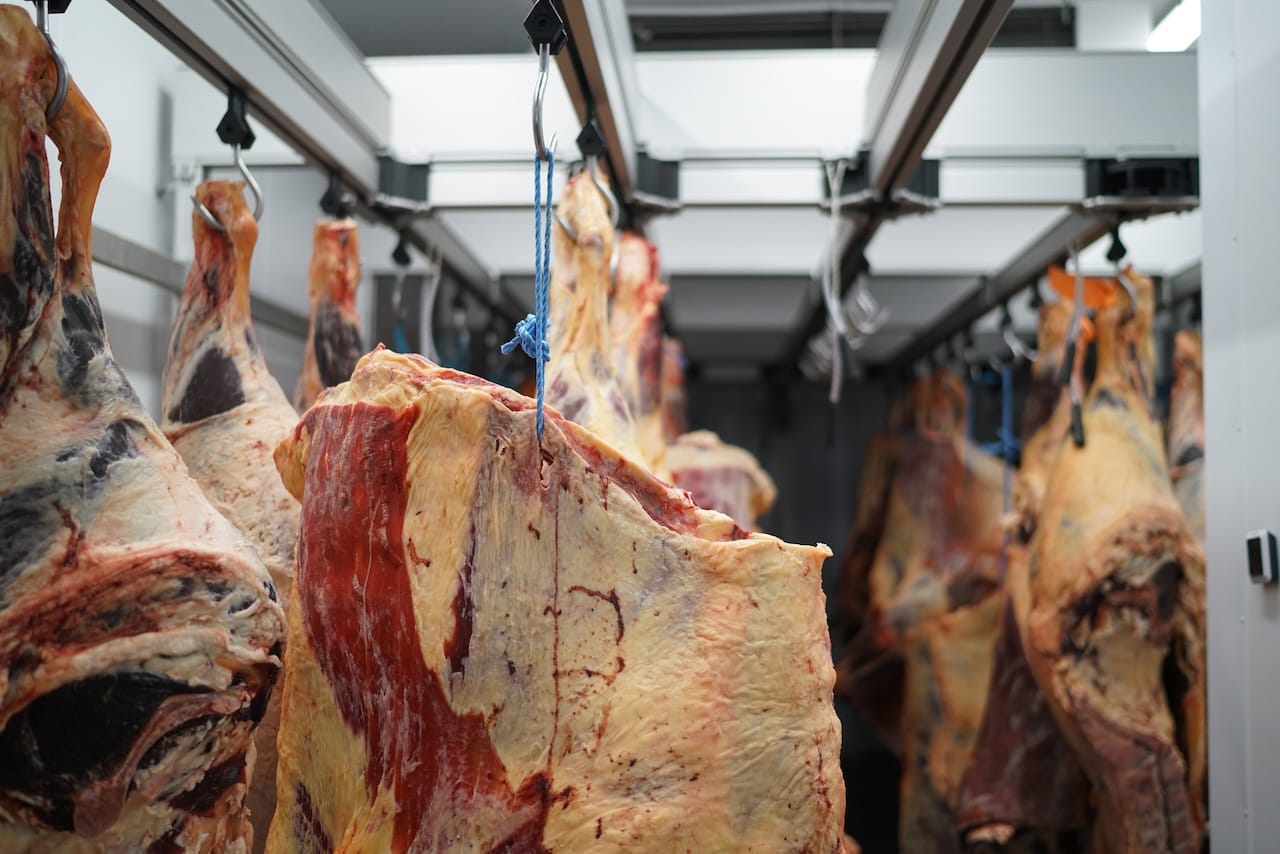
"People often ask us to hang beef for 28 days," Ian explains. "But we always want to see the carcass first. If it's got a good fat covering, that's usually fine. If it's a leaner carcass, hanging it that long can actually reduce the amount of quality meat the customer gets back."
Every animal is different, and understanding how to get the best from each carcass remains an important part of helping farmers maximise returns.
A New Generation of Farmers
If Ian's story is about diversification, Josie's is about building a farming business from scratch.
Josie Rollings joined Goodtrees two years ago after completing a butchery apprenticeship at Plumpton College. Neither she nor her fiancé Ollie Blake came from a farming background, but together they have built a flock of almost 200 breeding ewes on around 450 acres of rented land across Sussex.
"It started with a handful of sheep," she says. "My fiancé was paid with a few ewes for helping a neighbouring farmer, and that's where the flock began."
Everything has been built through grazing licences, informal agreements and opportunities that have come along over time.
"It hasn't always been easy," Josie admits. "There have definitely been moments where we've wondered whether this was going to work."
Alongside working four days a week at Goodtrees, she and her fiancé rear their own sheep and sell lamb boxes directly to customers. Their ambition is to expand to around 500 ewes if they can secure a long-term tenancy.
"That's what we're working towards," she says. "But it's hard if you don't come from a farming background. Those opportunities don't come up very often."
Despite the challenges, Josie believes sheep farming remains one of the most accessible routes into agriculture.
"I still think sheep are probably the easiest enterprise for new entrants to get into. With cattle you need buildings, handling systems and far more infrastructure. Sheep allow you to start smaller and build gradually."
Seeing Both Sides
Working as both a farmer and a butcher has given Josie a perspective that few livestock producers experience.
Most mornings start with her own sheep before she heads to the cutting room, where she sees first-hand how months of livestock management are reflected in the finished carcass.
"I love anatomy," she says. "It's fascinating seeing the hard work that goes into rearing an animal and then seeing what that produces on the block."
That experience has changed the way she and her fiancé finish their own lambs.
"People aren't buying fat—they're buying meat."
Rather than simply chasing live weight, they pay close attention to condition and carcass quality before deciding when lambs are ready.
"We weigh them, condition score them and look carefully over the loin and ribs. Sometimes my fiancé thinks a lamb is ready and I'll say, 'Leave it another couple of weeks.' Working here gives you a different perspective."
For Josie, seeing both sides of the supply chain has made her a better butcher and a better farmer.
Enterprise Pays
One message came through clearly from both Ian and Josie: today's livestock farmers need to think beyond simply producing quality animals.
"They need to be enterprising," Josie says. "The support payments aren't what they were, so people are asking how they can earn more from what they've already got."
Selling lamb boxes has enabled Josie and her fiancé to reinvest in their business, funding better fencing, a quad bike and improved handling facilities.
"We've got three or four times more sheep than when we started," she says, "but it's taking us less time because we've been able to reinvest."
Ian has seen a similar shift among the farmers using Goodtrees.
Increasingly, they are looking for advice on branding, packaging and presentation as well as butchery. For many, the butcher has become a business partner rather than simply someone who processes meat.
Beyond the Farm Gate
One of the strongest messages from this series has been that resilient farm businesses rarely rely on a single income stream. Whether through tourism, education, wine, regenerative farming or direct sales, the farms that are thriving are finding ways to add value to what they already produce.
Goodtrees Farm Butchers is part of that story.
Its success is built not on producing more livestock, but on helping farmers make more from the livestock they already have. As support payments continue to fall and margins remain tight, that ability to add value, build customer relationships and sell direct could become just as important as what happens in the field.