Pasture and Profit: Learning from the land and each other
Why farmer knowledge exchange matters in the High Weald and beyond
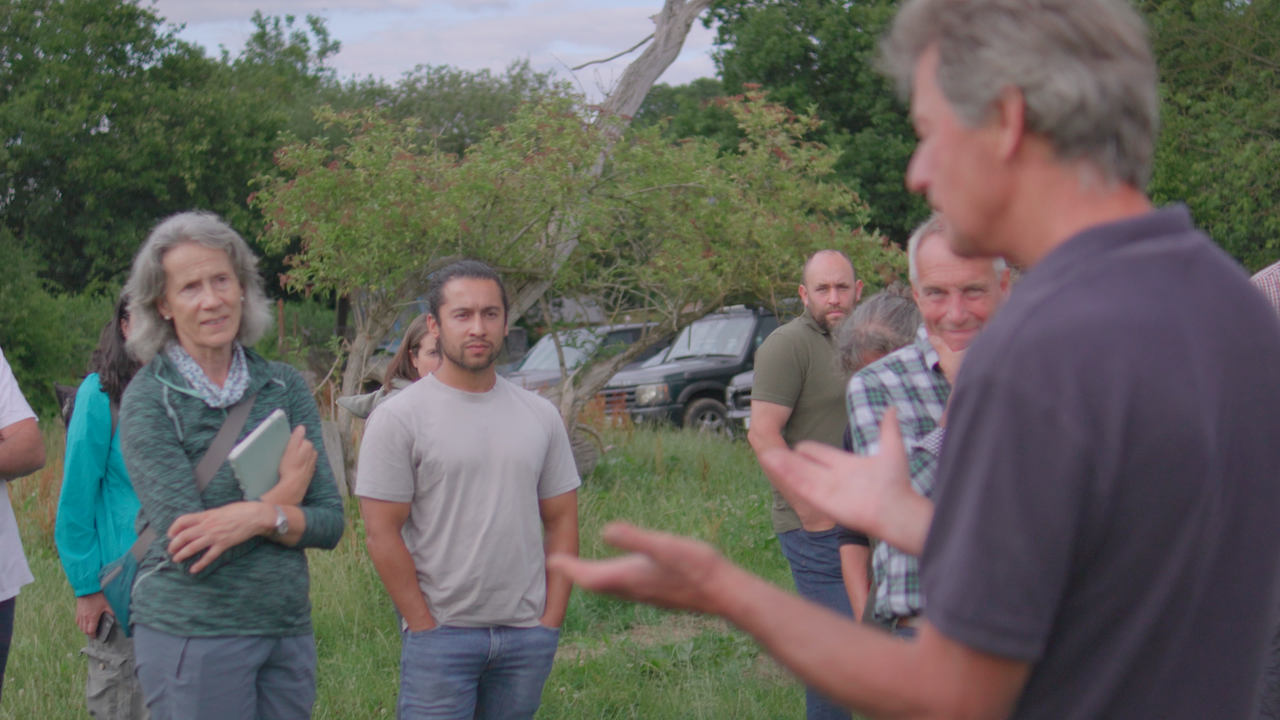
On a cold morning in early spring, a group of farmers stand quietly beside a hedge in the High Weald, watching a group of young cattle move slowly across the pasture. Boots press into the damp ground as the group studies the grass, the conversation drifting easily between soil structure, grazing rotations and livestock performance.
A member of the group kneels down and pulls apart a handful of soil. Another points towards a line of newly planted trees along the field edge.
There are no microphones or lecture slides. Just farmers talking.
Moments like this have become increasingly common across the High Weald in recent years as part of a programme designed to bring livestock farmers together to share knowledge, explore regenerative grazing practices and build resilience in the face of an increasingly uncertain future.
Funded by the Farming in Protected Landscapes Fund (FiPL) and supported through the Pasture for Life network and the High Weald National Landscape, the initiative has created opportunities for farmers to learn directly from one another through farm walks, workshops and online discussions. The idea is simple: farmers are often best placed to help other farmers solve practical problems.
And judging by the response from those taking part, the approach appears to be working.
The power of peer-to-peer learning
For many farmers, knowledge exchange has always been an informal process. Advice shared across farm gates, conversations in livestock markets, or a quick phone call to a neighbour when something unexpected happens in the field.
But modern farming can often feel increasingly isolated. Labour shortages, regulatory pressures and volatile markets mean many farmers spend long hours working alone.
Bringing farmers together, even for a few hours, can create valuable opportunities to exchange ideas.
Often the most useful conversations happen between fields, leaning on a gate, studying a sward, or comparing notes while a group of cattle moves quietly past.
Through the High Weald Pasture and Profit in Protected Landscapes programme, farmers have been meeting regularly to discuss everything from grazing strategies to soil health and biodiversity. Events range from small farm walks to larger workshops and online sessions, allowing farmers to explore topics in depth and ask questions in a relaxed setting.
One of the clearest messages from farmers taking part is the confidence they gain from hearing how others are tackling similar challenges.
“You leave these events realising you’re not the only one trying to figure things out,” one farmer said. “It gives you confidence to try something new.”
Many participants say they leave events with ideas they feel comfortable testing on their own farms, whether that means adjusting grazing rotations, experimenting with different pasture species or exploring new ways of managing water.
Crucially, the learning process works both ways. Even experienced regenerative farmers often come away with fresh insights after hearing how others are tackling similar challenges.
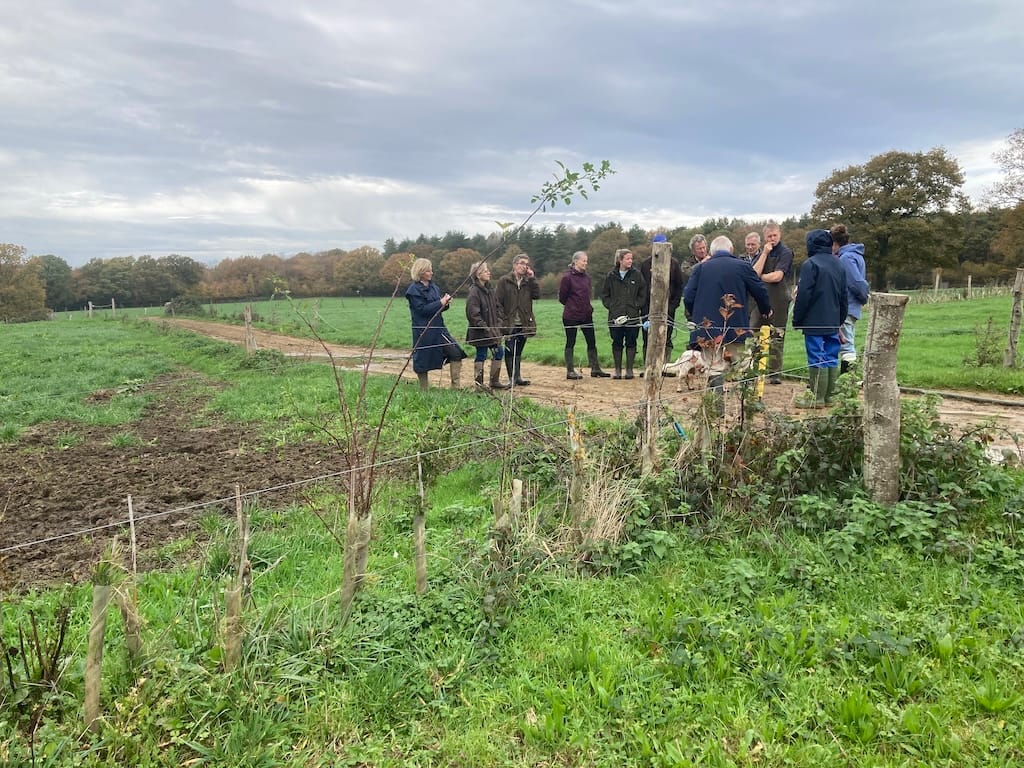
Using Hedges, Compost and Woodchip Event
Resilience in a changing climate
If there is one topic that repeatedly surfaces in conversations with farmers today, it is resilience.
Across the High Weald, as in many parts of the country, livestock farmers are experiencing increasingly unpredictable weather patterns. Wet winters, dry summers and sudden extremes of temperature are becoming more common.
For many farmers, the emotional and practical impact of this unpredictability is becoming increasingly apparent. Several participants in the programme spoke about how difficult it has become to plan grazing, cropping or investment decisions when weather patterns feel less reliable than they once did. The stress of dealing with extreme conditions — whether prolonged wet periods or sudden drought, is something many farmers say they are feeling more acutely in recent years.
In response, many of the programme’s events have focused on how farming systems can adapt to these changes.
Some discussions centre on soil health and pasture management. Others explore the role of hedgerows, trees and water infrastructure in helping farms cope with drought or flooding.
At one event, farmers heard how installing large rainwater harvesting tanks could reduce reliance on mains water and potentially save hundreds of pounds per month in water bills.
For livestock farms, where water demand can be significant, the financial implications alone make such systems worth considering. But there are also wider benefits in terms of drought resilience and long-term sustainability.
These practical examples help turn what can sometimes feel like abstract environmental conversations into tangible, farm-level decisions.
Alongside the pressures created by weather, farmers also spoke about wider sources of uncertainty, including unpredictable funding schemes and the increasing complexity of agricultural paperwork. In this context, the opportunity to meet with other farmers facing similar challenges becomes especially valuable. Many participants say that simply being able to share experiences and compare approaches helps build confidence that they are moving in the right direction.
From pasture to plate
Another area that has generated considerable interest is the supply chain.
One of the most popular events this year involved a visit to Goodtrees Farm and its onsite butchery (you can read my feature on them in last month’s edition) in Ashdown Forest. While many farmers are increasingly interested in selling meat directly to customers, the process between slaughter and finished product can remain something of a mystery.
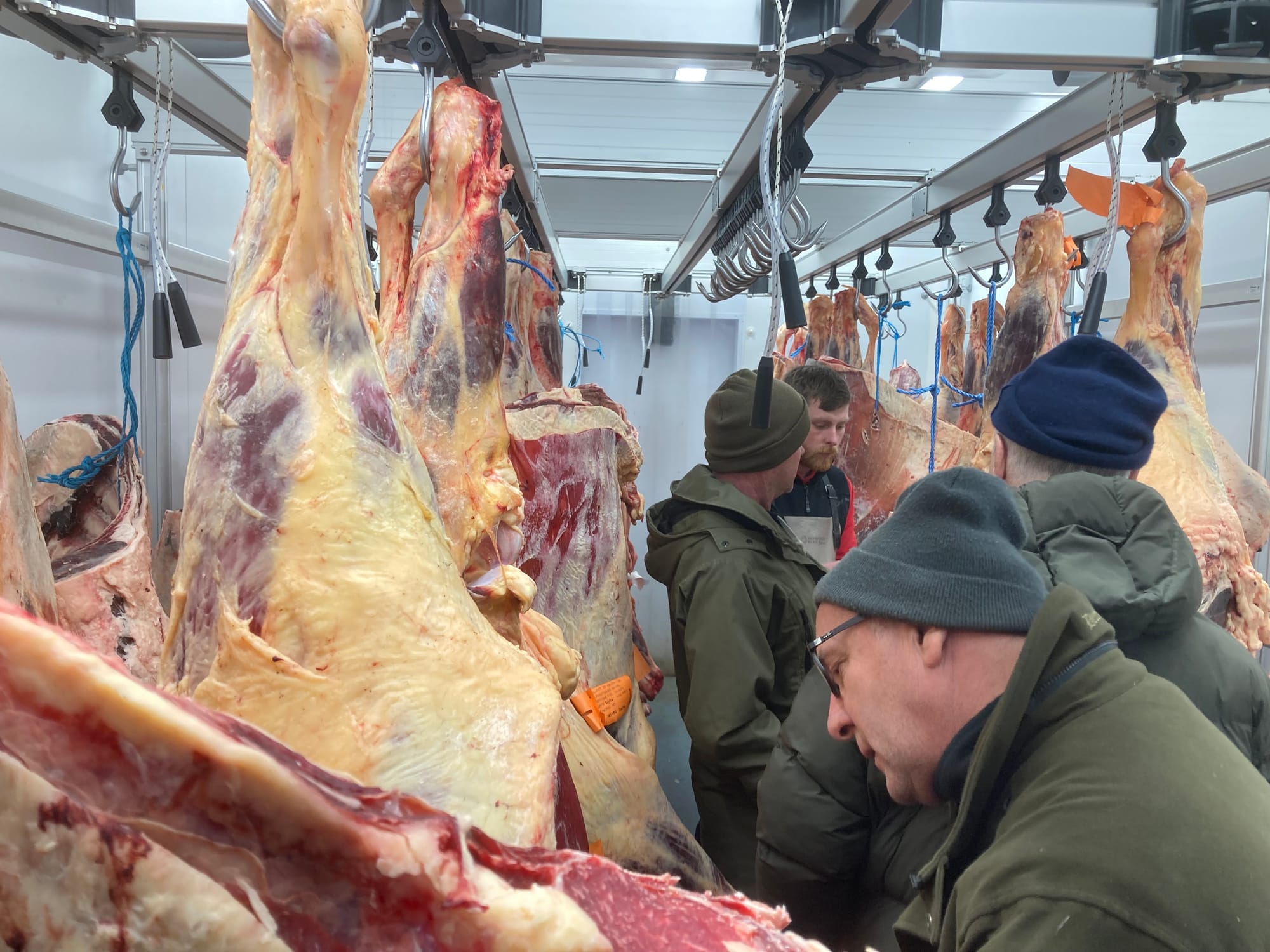
For some attendees, the visit highlighted how little they understood about carcass cutting specifications, butchery forms and the importance of clear communication with processors.
Something as simple as failing to specify the correct cuts can affect how much of the carcass is returned, and therefore the overall value of the animal.
By seeing the process first-hand and speaking directly with butchers, farmers were able to build confidence in an area that often feels daunting for those new to direct marketing.
It was a reminder that resilience on the farm is not only about soil and grass, but also about understanding the economics of the food system.
Bridging the experience gap
One of the interesting dynamics within the programme is the mix of farmers taking part.
Some are highly experienced livestock producers who have been farming for decades. Others are relatively new to regenerative grazing or are in the early stages of transitioning their systems.
This diversity creates valuable opportunities for learning.
At one end of the spectrum are farmers who have spent years refining their approach and can read the health of a pasture simply by observing plant growth and animal behaviour.
At the other are those looking for clearer guidance, wanting to know which measurements matter, how to assess soil health or what indicators to look for when evaluating biodiversity.
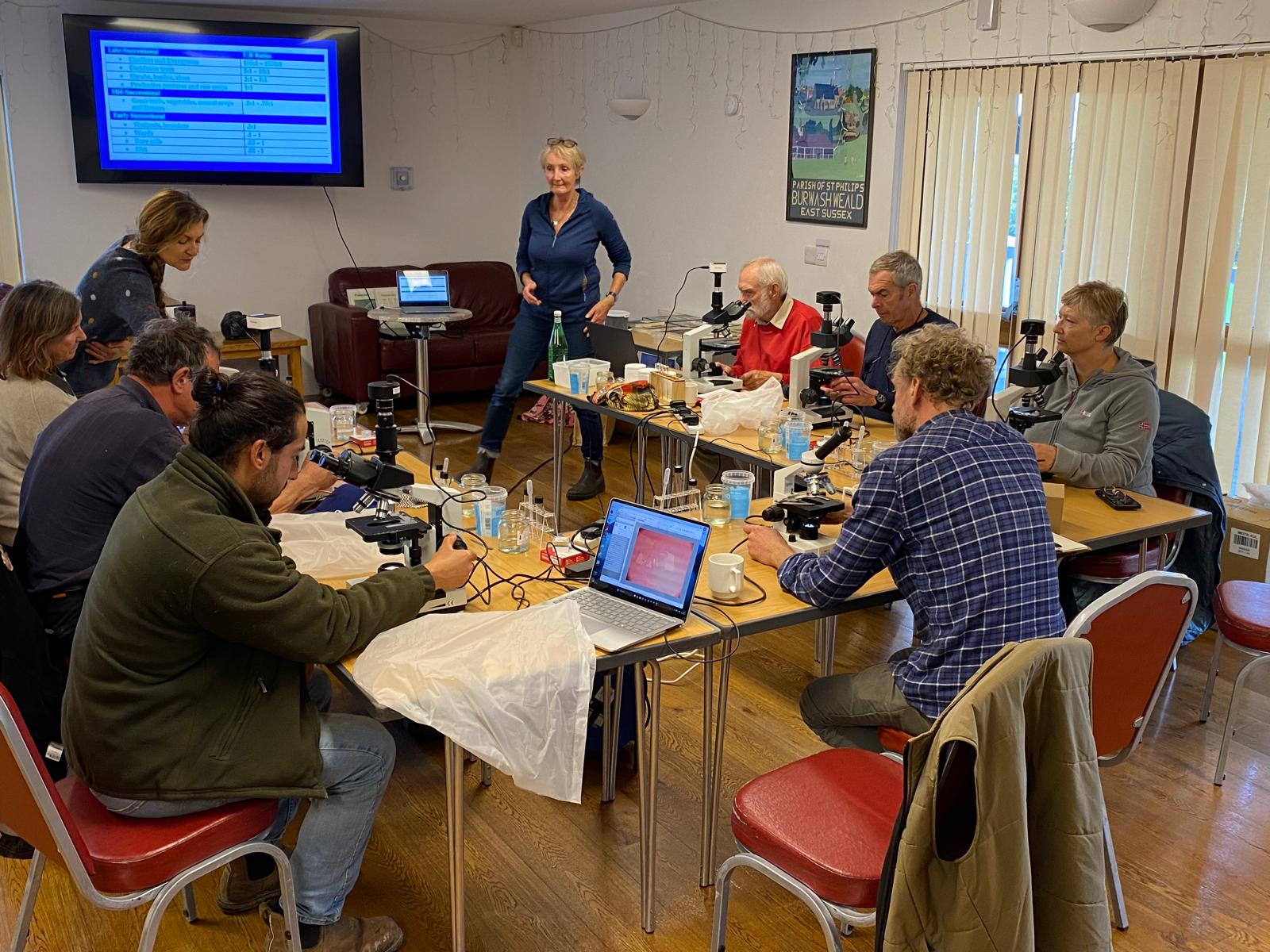
In practice, the two perspectives often complement each other. Experienced farmers bring intuition and long-term perspective, while newer entrants sometimes ask the questions that prompt deeper reflection about why certain practices work.
Over time, the goal is to help farmers move toward greater confidence in observing and interpreting what is happening in their fields.
The role of facilitation
Although farmer-to-farmer learning sits at the heart of the programme, it rarely happens without someone helping to organise it.
Facilitators play a critical role in bringing farmers together, arranging events and responding to emerging topics of interest.
In many cases, new workshops have been organised directly in response to conversations that began at earlier events.
For example, a discussion about stocking density during a winter grazing session generated enough interest that organisers quickly arranged a follow-up workshop focused specifically on that subject.
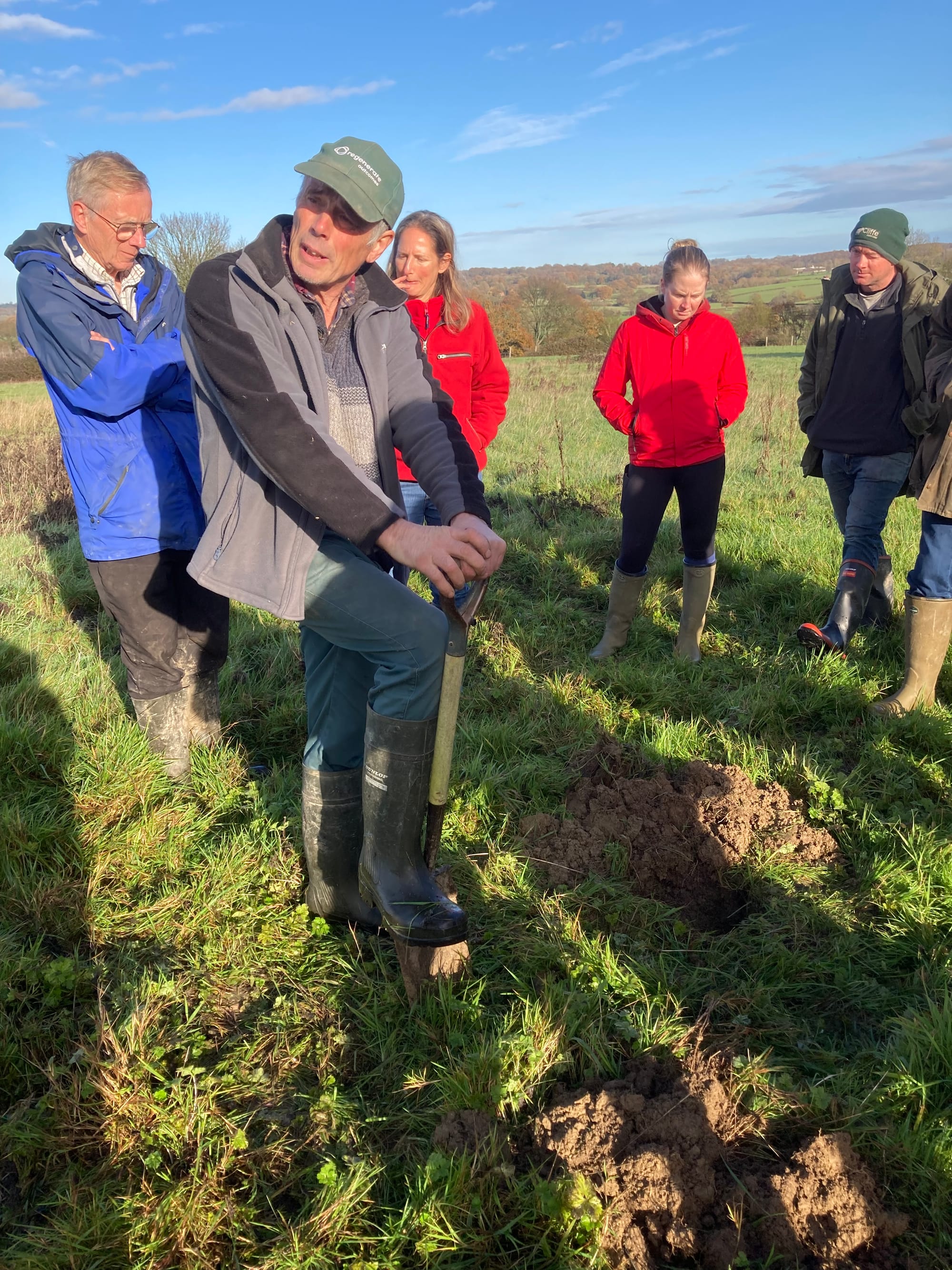
This responsive approach helps ensure the programme remains grounded in the practical needs of farmers rather than following a rigid agenda.
It also helps build a sense of community. Farmers attending multiple events often develop informal networks, exchanging ideas through WhatsApp groups and phone calls long after the official workshops have ended.
A wide range of farmers involved
Participants come from a wide range of backgrounds. Some have been farming their land for generations, while others are newer entrants exploring livestock systems for the first time.
One farmer involved in the programme, who had initially been considering retirement, found that exposure to regenerative grazing ideas inspired him to rethink the future of his farm.
Instead of stepping away from farming, he began transitioning his land toward a rotational grazing system, a change he might never have considered without the encouragement and insights shared through the programme.
Stories like this illustrate how knowledge exchange can influence long-term decision-making.
Sometimes it is not about adopting a specific technique, but about rediscovering enthusiasm for farming itself.
Looking ahead
The success of the High Weald Pasture and Profit in Protected Landscapes programme highlights the continued importance of farmer-led learning.
Many of the ideas discussed are not entirely new. Farmers have always adapted, experimented and shared knowledge with neighbours.
What initiatives like this provide is the structure that helps those conversations happen more regularly and across a wider network.
For farmers navigating the challenges of climate change, volatile markets and evolving policy landscapes, that exchange of ideas may prove increasingly valuable.
Because while agricultural research and policy both have important roles to play, some of the most meaningful insights in farming still come from the land itself — and from the farmers who walk it every day, paying attention to what their fields, animals and soils are quietly telling them.
For more information on future learning opportunities check out the High Weald National Landscapes and Pasture for Life websites.