Organic Dairy Farming in the High Weald
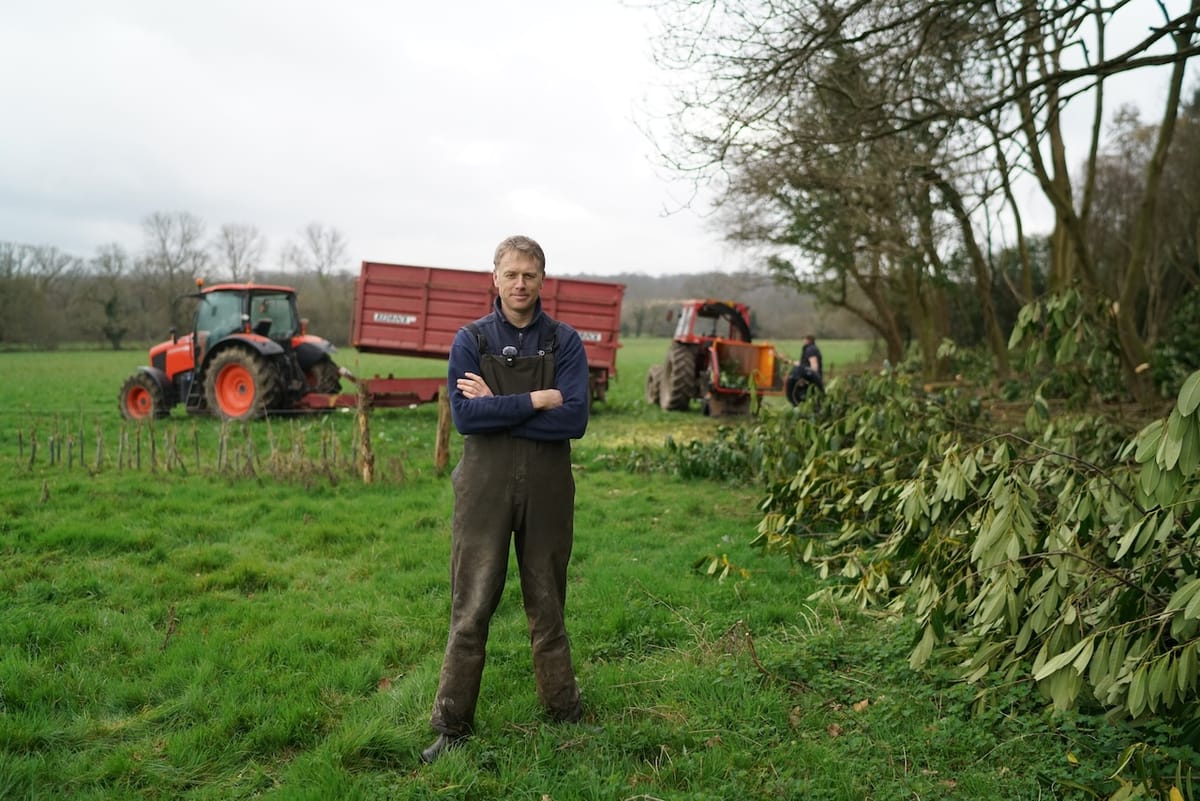
In the latest instalment of my twelve-part series, supported by the Lund Trust and the High Weald National Landscape, I visited Cockhaise Farm near Haywards Heath, in East Sussex to spend a day with organic dairy farmer Dan Burdett, to learn how he is managing a 240-cow dairy herd while balancing environmental stewardship and the long-term future of the family farm.
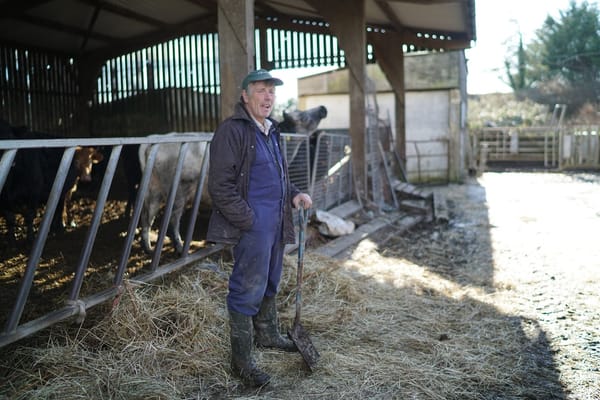
When I arrived at Cockhaise Farm on a mild early spring morning, the dairy cows were still in the barn.
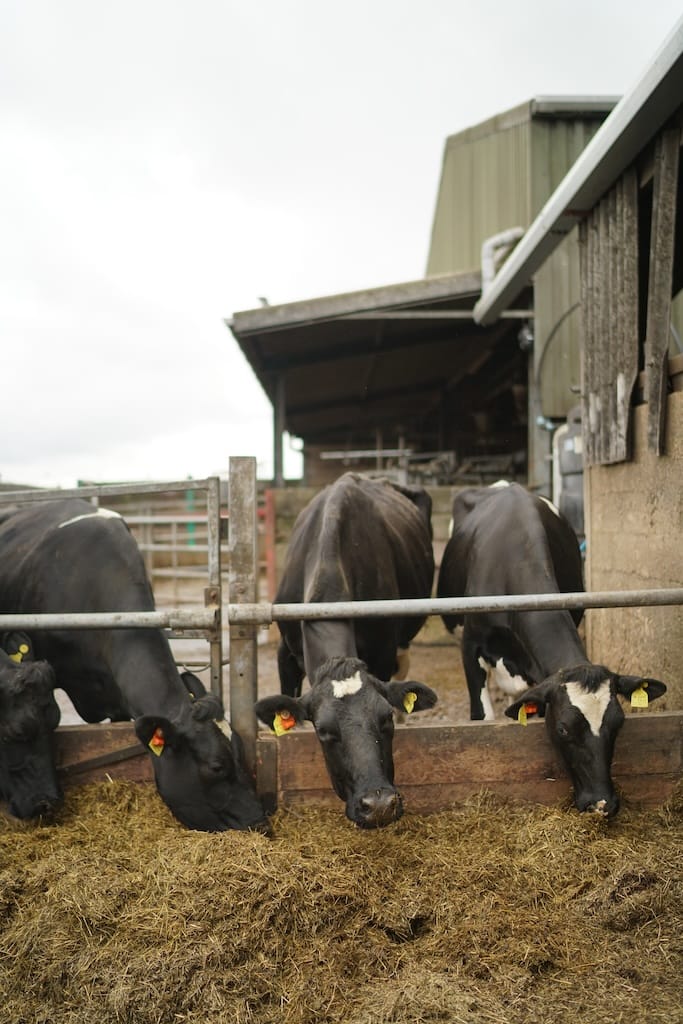
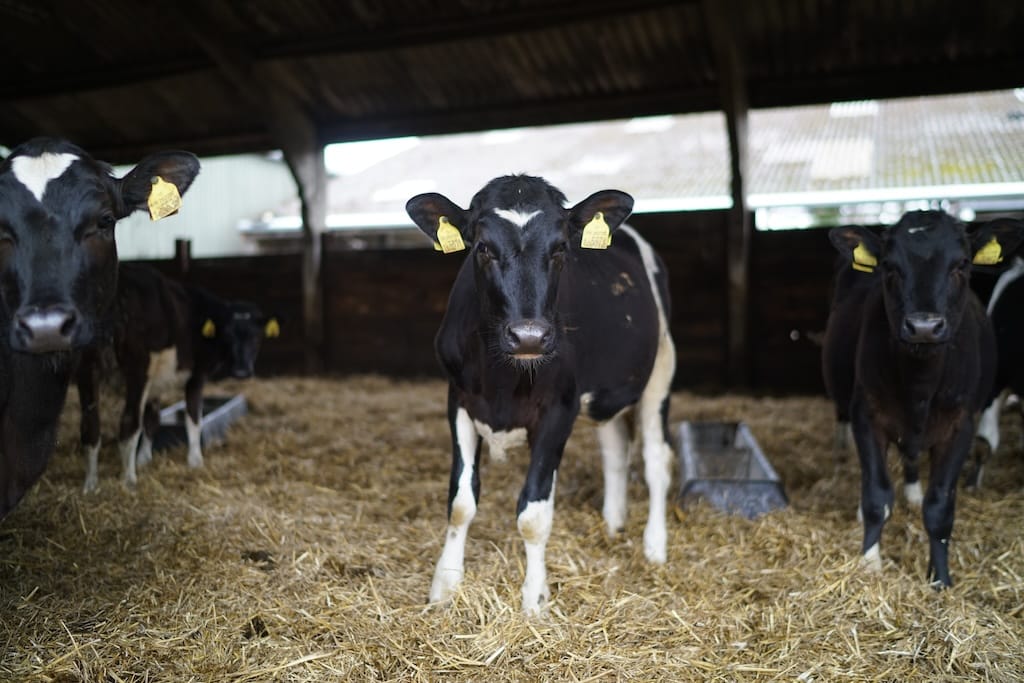
Inside the main dairy shed the herd stood quietly at the feed barrier while young replacement heifers watched curiously from nearby pens. Outside the grass was just beginning to move after winter, but the ground remained soft underfoot — not quite ready yet for cows to be fully turned out.
“They do go out for a short time in the mornings,” Dan Burdett told me as we walked across the yard. “But we’re still waiting for the ground conditions to improve before they go out properly.”
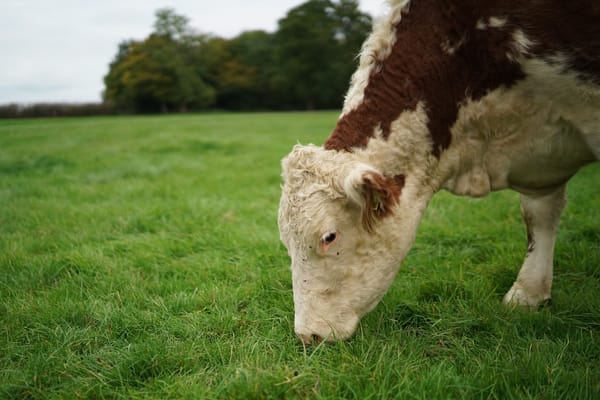
Later in the season these fields will once again be filled with grazing dairy cows moving through paddocks of herbal leys. But for now the farm sits in that familiar transition between winter housing and the start of the grazing season.
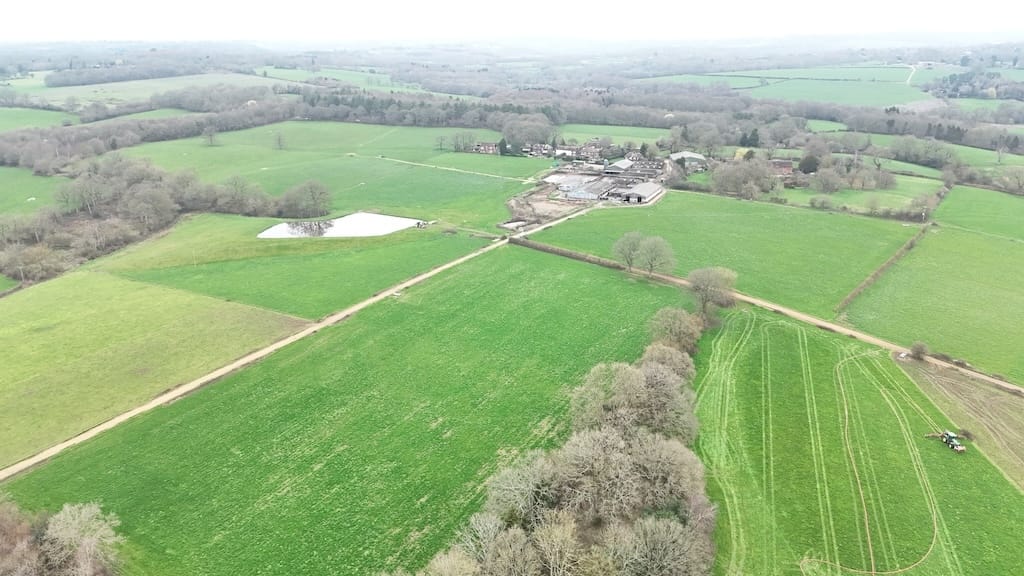
Set within the rolling landscape of the High Weald National Landscape near Haywards Heath in East Sussex, Cockhaise Farm is one of many farms in the area quietly adapting their systems as they balance food production with the long-term health of the land.
Dan’s family has farmed at Cockhaise for more than forty years.
“My dad moved here as a contract farmer about forty years ago,” he explains. “I went away for a while and worked in London for a bit, but I came back in 2008 and set my own business up here.”
The pull of farming, it seems, never quite disappears.
“I always had a hankering that I wanted to work outdoors,” he said. “I wanted to be my own boss and do something a bit more energetic than sitting behind a desk.”
His wife offered a simple observation.
“Well, that’s exactly what your dad does.”
The Dairy System
Today Cockhaise Farm runs a herd of around 240 milking cows, alongside more than a hundred youngstock coming through the system.
The herd calves in autumn and is managed around a relatively straightforward grazing-based system.
“The main enterprise here is dairy,” Dan explained. “We calve in the autumn and then we’ve got roughly two years’ worth of youngstock behind them.”
The farm is organic, something Dan sees as closely aligned with many of the principles now described as regenerative farming.
“I always put organic above regenerative,” he said. “Organic is really the original regenerative system. Perhaps the auditing side of things has taken a bit of the passion out of it over the years, but the core ideas are still there.”
For around 8 months of the year the cows are grazing, although at the time of my visit they remain housed while the ground recovers from winter.
Grass remains the cheapest feed a dairy farmer can grow, and managing it well is central to the system.
Diversity in the Pasture
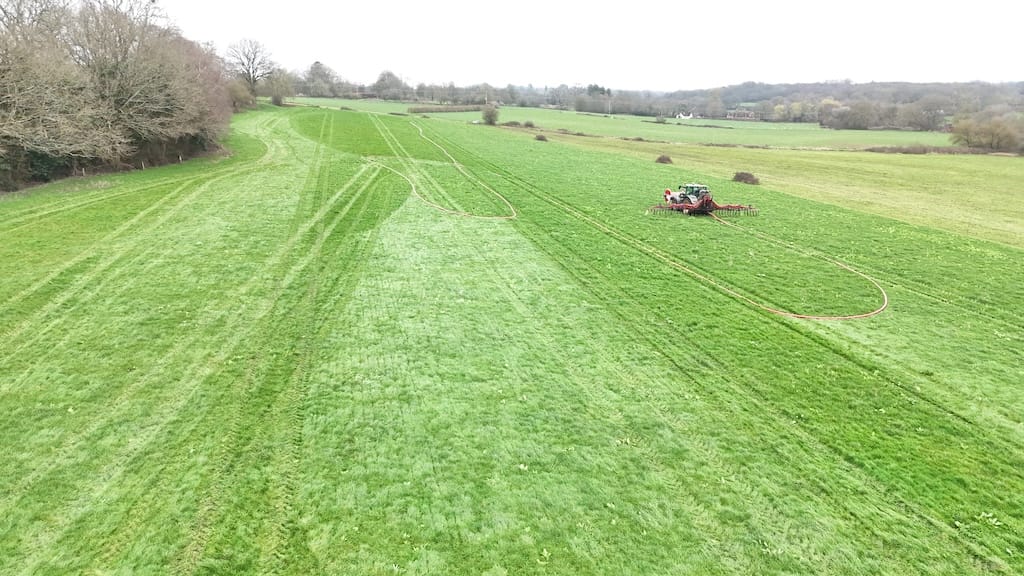
Like many farmers looking to build resilience into their grassland, Dan has been experimenting with herbal leys for more than a decade.
“We started trying herbal leys around 2014,” he says. “Now whenever we reseed paddocks on the grazing platform we’ll usually put a herbal mix back in.”
These swards typically include clovers and plantain alongside productive grasses.
The aim is simple: improve soil health, drought resilience and animal nutrition while maintaining productivity.
More recently the farm has also begun experimenting with silvopasture, planting trees into grazing paddocks to increase diversity across the landscape.
“We’ve planted about seven or eight acres of silvopasture,” Dan explained. “It’s really a trial to see how it works, but the idea is to bring trees into the grazing system.”
Several environmental improvements on the farm have also been supported through Farming in Protected Landscapes (FiPL) funding, including hedgerow planting and woodland management.
One project helped fund a wood chipper, which is now being used to tackle invasive cherry laurel in some of the farm’s woodlands.
“The woods had become quite choked with laurel,” Dan explains as we walk along the edge of one of the woodland blocks. “It grows very quickly and creates a really dark canopy where not much else survives.”
By cutting and chipping the laurel, the team has been able to open up the woodland floor and allow more light back in.
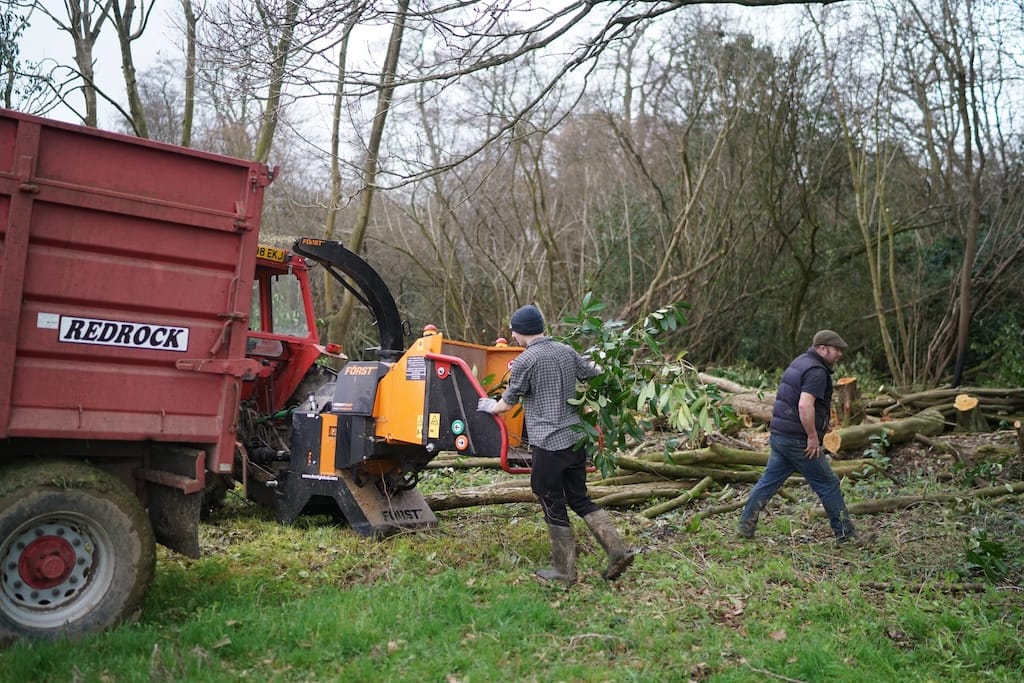
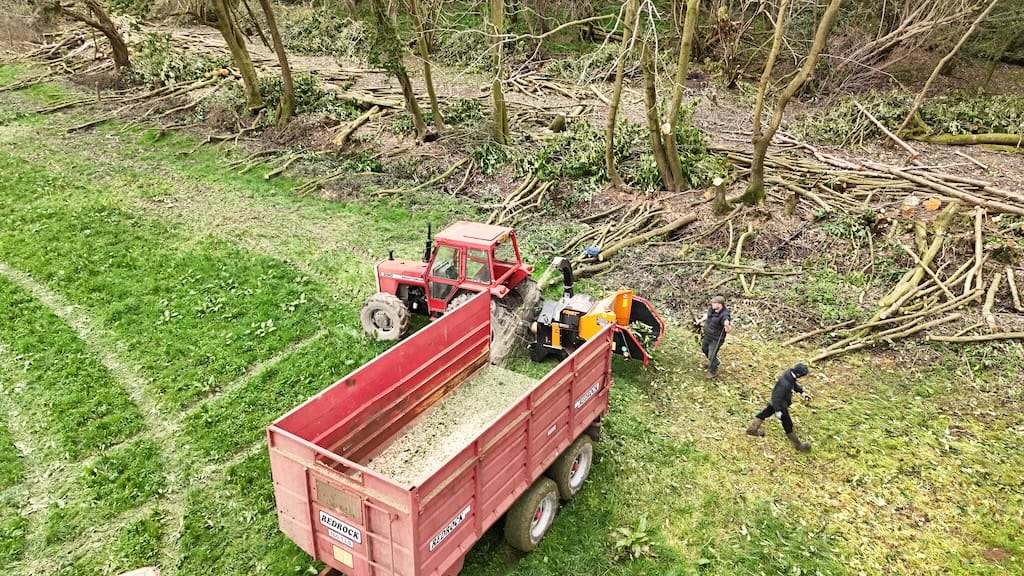
“It makes a huge difference,” he says. “Once you get some light back into the woods, other plants can start to come through again.”
The chipped material is put to practical use across the farm — spread along footpaths to guide visitors, used around newly planted hedges, and occasionally trialled on small areas of pasture.
“It’s not something we’re doing on a huge scale,” Dan said, “but it’s a practical way of improving the woods and making use of the material at the same time.”
Walking across the farm, it becomes clear that these incremental changes are gradually reshaping the landscape.
Refocusing on Cockhaise
Last year marked something of a turning point for the farm.
For several years Dan had been running the dairy at Bore Place under a contract farming arrangement, effectively managing two businesses alongside each other.
But last summer the cows there were sold and the arrangement came to an end.
“We came out of Bore Place last July,” he said. “So now we can concentrate back on Cockhaise, which is nice.”
The change has allowed him to refocus fully on the farm where he grew up — and, in many ways, rediscover the parts of dairy farming he enjoys most.
“When you’re trying to run too many things at once you can lose the love for it a bit,” he said. “I felt like I was going through the motions for a while.
“But now I’ve got a bit of a new lease of life. I enjoy the cows, I enjoy the people I work with.”
With the pressure of running two farms removed, he has also been able to tackle jobs that had been postponed for years.
“We’re getting some of the things done that we’d been putting off for ages.”
A settled team has helped bring stability back to the farm as well.
“We’ve got a really good group of people here at the moment.”
Supporting the Next Generation
Alongside the daily work of the dairy, Dan has noticed increasing interest from young people keen to work on farms.
Some arrive through agricultural colleges such as Plumpton, while others come through school work-experience placements.
“There seem to be quite a lot of younger people around who want to work outdoors,” he said.
“Some of them realise sitting in an office or staying in education isn’t really for them. They just want to work.”
One young student recently began helping with milking.
“The first time he milked he didn’t even want to touch the cows,” Dan laughed. “The second time he milked about five. By the third milking he was doing fifty, and last weekend he milked sixty.”
Experiences like that, he says, highlight the value farming can have for building confidence.
“He’s a very bright kid but maybe struggles with confidence. Being around animals and working outside can really help people like that. It’s nice if we can give them a different outlook and show them other opportunities.”
Reinvesting in the Farm
Like most dairy farms, Cockhaise requires constant reinvestment simply to keep the system running smoothly.
Tracks need repairing, buildings need maintaining and grazing infrastructure must continually be improved. New sleeper tracks have recently been installed across the farm to allow cows easier access to grazing fields during wet springs and autumns.
Dan is also planning to build a new barn later this year.
“If we’re not able to reinvest, things slowly start to fall apart,” he said.
For him, maintaining the farm is about more than just keeping the business viable in the present.
“There’s always that feeling that you want to leave the farm in a better place for the next generation,” he said.
“I don’t want to look back and think the farm is worse than when I took it on.”
Thinking About the Future
Behind the scenes, Cockhaise Farm is also slowly preparing for its own generational transition.
The farm itself is owned by Dan’s father and aunt, and a new ten-year agreement is currently being put in place to secure the future of the dairy business.
“My dad and his sister own the farm,” Dan explained. “So we’re signing another ten-year contract with them.”
At the same time the next generation of the family will begin to become involved in the ownership structure.
“My sisters will start to be involved as well,” he said. “So we’re trying to be as transparent as possible about how the business works — where the money flows, what work goes in, and what’s left at the end.”
It is, he admits with a smile, a gradual process.
“We’re sort of creeping towards the next generation slowly. But that’s fine. It’s working quite well for us.”
Land, Schemes and Food Production
Dan also reflected on the wider changes taking place across the countryside as landowners consider new environmental schemes and emerging natural capital markets.
“I think there’s quite a lot of uncertainty at the moment about what people should do with land,” he said. “Some of the advice landowners are getting seems to be to go into schemes almost for the sake of it.”
While he sees clear value in improving the environment, he believes food production still plays an essential role in rural economies.
“We obviously want to balance things with nature,” he said. “But food production is where the jobs are in general.”
With a number of farms in the area going through generational change, he believes opportunities may emerge for new farmers or businesses to access land in the future.
“There’s quite a lot of land locally where people aren’t quite sure what to do next,” he said. “That might create opportunities.”
A Cautious View of Natural Capital
Like many farmers, Dan is watching the rapid rise of natural capital markets and environmental payments with interest — but also with a degree of caution.
“I feel pretty dubious about some of it,” he said. “The carbon market especially.”
Part of his concern is that some schemes risk becoming more about corporate sustainability claims than long-term outcomes on the ground.
“There’s always a risk of greenwashing.”
Another concern is the length of some agreements being proposed to farmers.
“What we don’t want is land tied up in very long contracts — forty or fifty years — that go beyond our generation.”
At the same time he acknowledges that such approaches may suit larger estates in the area.
“Some of the estates around here are looking at it quite seriously,” he said, pointing to examples such as Knepp and Iford, where land managers are exploring landscape-scale environmental projects and nature markets.
For Cockhaise Farm, however, the approach is likely to remain more gradual.
“We tend to do things incrementally,” he said. “Try things where the risk is manageable and see how they work.”
The Calm of the Cows
As we finish our walk around the farm, the cows remain content inside the dairy shed, chewing the morning’s ration.
For Dan, moments spent among the cows remain one of the simplest pleasures of farming.
“There’s something very calming about them,” he said.
After several years balancing responsibilities across two farms, the renewed focus on Cockhaise Farm seems to have brought that feeling back.
Running a dairy farm is rarely easy, but the rhythm of livestock, land and seasons still provides a sense of purpose.
And, like many farmers, Dan measures success not just by production or profit, but by the condition of the farm itself. A place, he hopes, that will be left in better shape for those who come after.