Falconhurst Estate: Holding It All Together
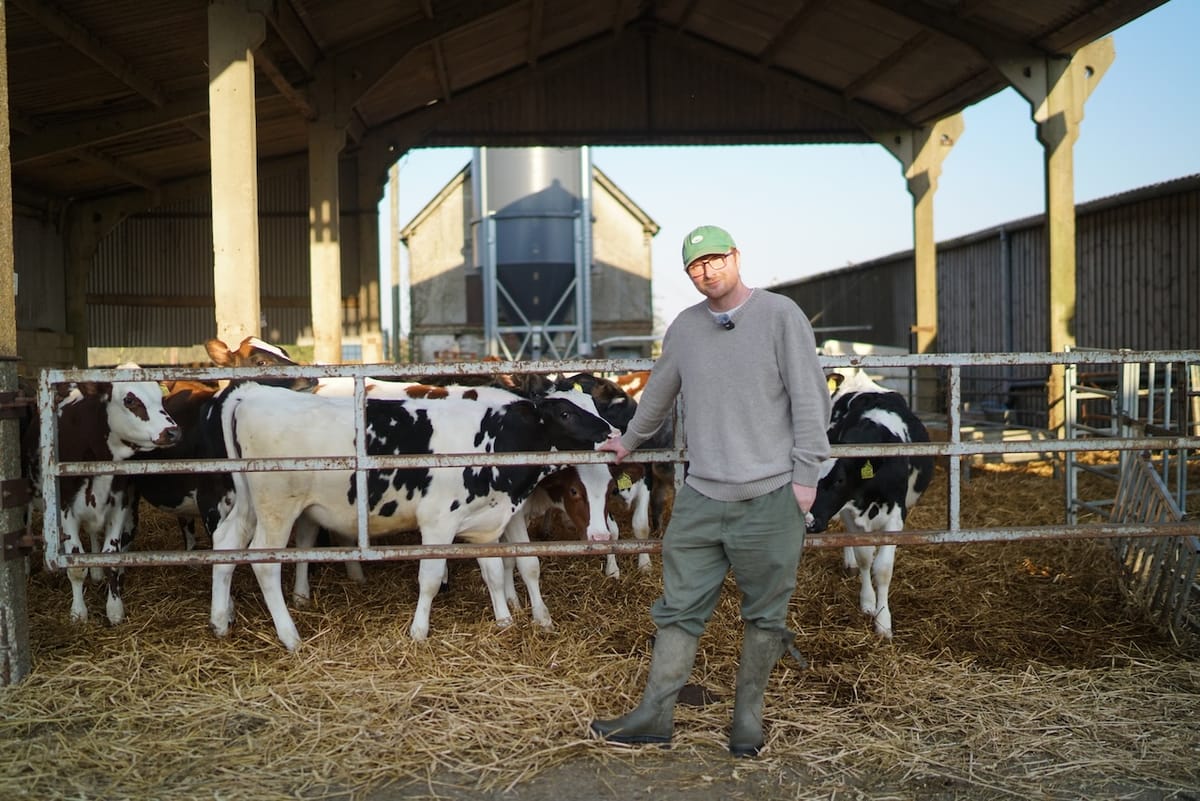
In the seventh instalment of my twelve-part Indie Farmer series, supported by the Lund Trust and the High Weald National Landscape, I visited Falconhurst Estate near Markbeech, Kent, to spend time with George Talbot and understand how a mixed organic dairy and estate business is being shaped in practice.
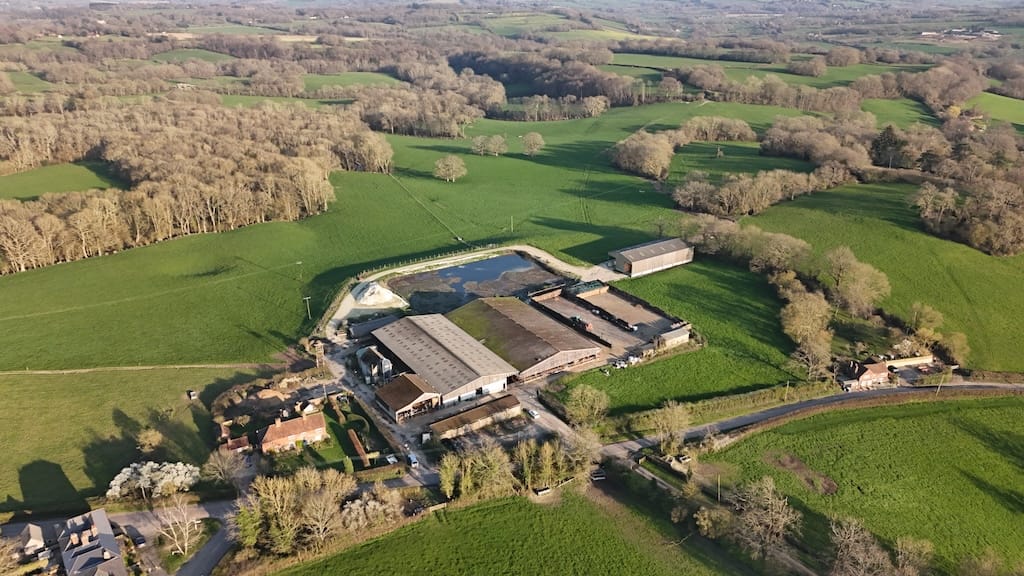
There’s a high point on Falconhurst Estate called Hoppers bank, where the ground falls away just enough to open the view.
From the ridge, the High Weald rolls out in soft folds — pasture stitched with hedgerows, pockets of woodland, the suggestion of farms working quietly beneath the surface.
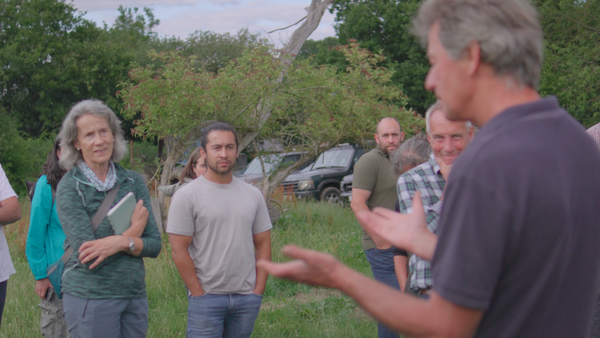
It’s the kind of place that invites big ideas. Long tables on the hillside. A village gathering. A farm open to people again.
“It would be an amazing space,” George Talbot said, looking out across it. “We’ve talked about it. But it’s always a bit weather dependent.”
That tension — between possibility and practicality — runs through everything here.
Falconhurst isn’t a farm trying to become something else. Nor is it a neatly packaged diversification success story. It sits somewhere in between: an estate trying to make sense of modern farming, while holding onto something older — a working landscape that still needs to function.
A farm finding its footing
When I last visited Falconhurst a couple of years ago, the business was still shifting — experimenting with supper clubs, testing ideas, trying to work out where the balance might lie between farming and everything around it.
Today, it feels more settled. Not finished, but clearer. George is still deeply involved across the estate, but his role has shifted. A retail and events manager now leads on the shop and events side, freeing up time — and focus.
“It’s been really positive,” he said. “Instead of me spending 10% of my time thinking about events, you’ve got someone spending 50% of their time on it.”
It’s a small change, but an important one. Not just delegation — but intent. A recognition that diversification only works when it’s properly resourced.
At the same time, the dairy — the core of the farm — has quietly strengthened. The Pickering family continue to run the herd under a contract farming agreement, but with a key change: Greg Pickering now operates with full responsibility and clearer incentives.
“The buck stops with him,” George explained. “And that’s worked really well for both parties.”
It’s a model built on transparency. Costs are visible, decisions are shared, and the outcome — whatever remains — is split.
In an industry where relationships can often fray under pressure, that clarity matters.
The system beneath it all
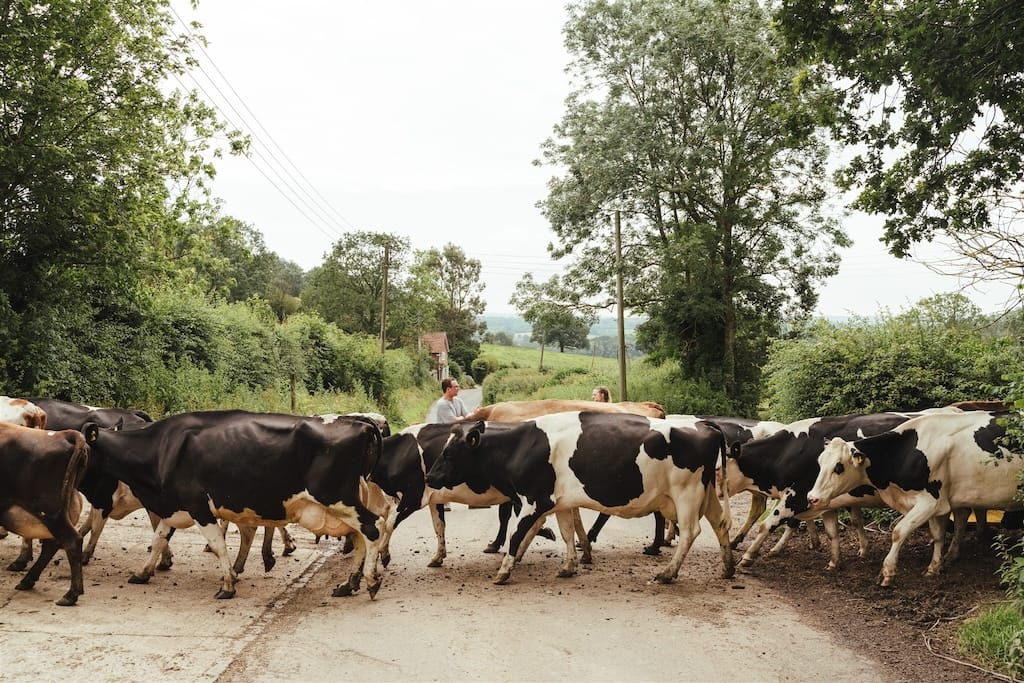
Out in the yard, the herd moves quietly through the parlour. Around 210 cows now — settled, consistent, productive.
The breeding has shifted too.
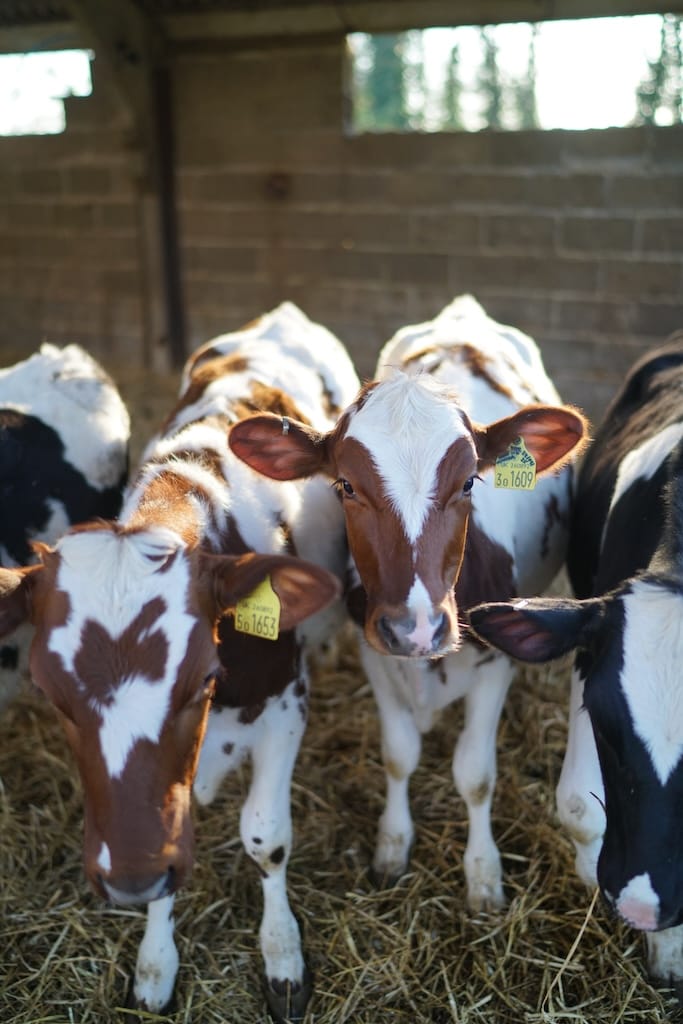
What was once a mix — Jerseys, Friesians, Shorthorns, Longhorns — has been gradually brought into a more uniform system: a ProCross blend of Montbéliarde, Holstein and Viking Red.
“They’re quite stocky, quite wide-footed,” George explained. “Better suited to the clay around here.”
It’s a practical decision, grounded in place. This is heavy Wealden clay — land that dictates terms. Animals that can carry themselves here, particularly at the edges of the grazing season, reduce pressure elsewhere: on infrastructure, on labour, on vet bills.
The system has settled into an autumn block-calving pattern, now a few years in. Not perfect — no system is — but working.
And that word comes up repeatedly: working. Because for a period between 2016 and 2021, it wasn’t.
“There was a stretch where it just wasn’t really working,” George admitted. “And when you’ve invested in things like the parlour, you start to question those decisions.”
Now, with organic milk prices holding relatively steady while conventional markets fluctuate, the farm has found a degree of stability.
Break-even sits somewhere around 42–43p per litre. Above that, there’s room to breathe. Below it, the margin tightens quickly.
It’s a familiar story — but here, it’s not the whole story.
More than just milk
Falconhurst has always been more than just the dairy.
The estate includes property, a farm shop, events, weddings, and a growing interest in connecting people back to the land.
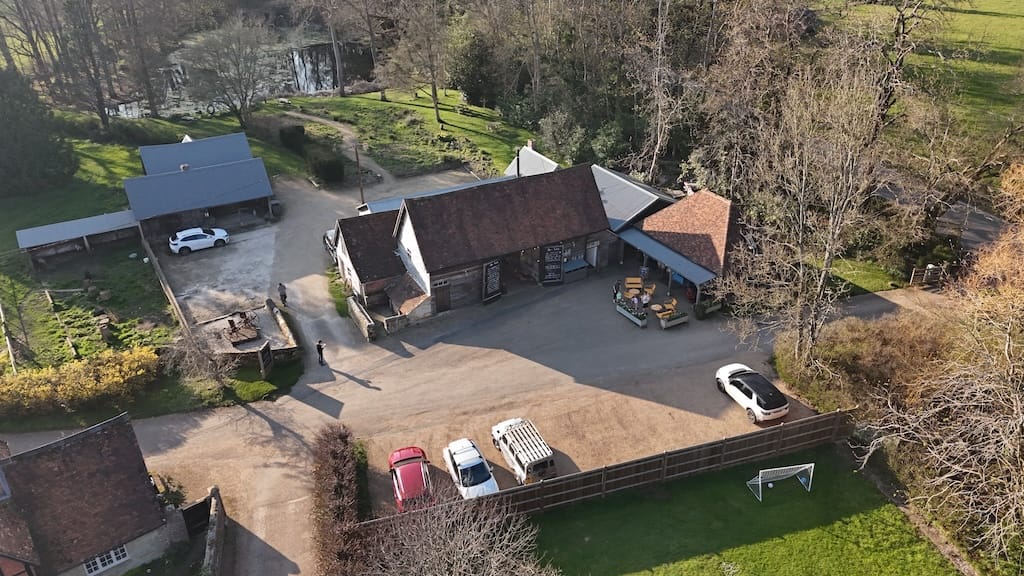
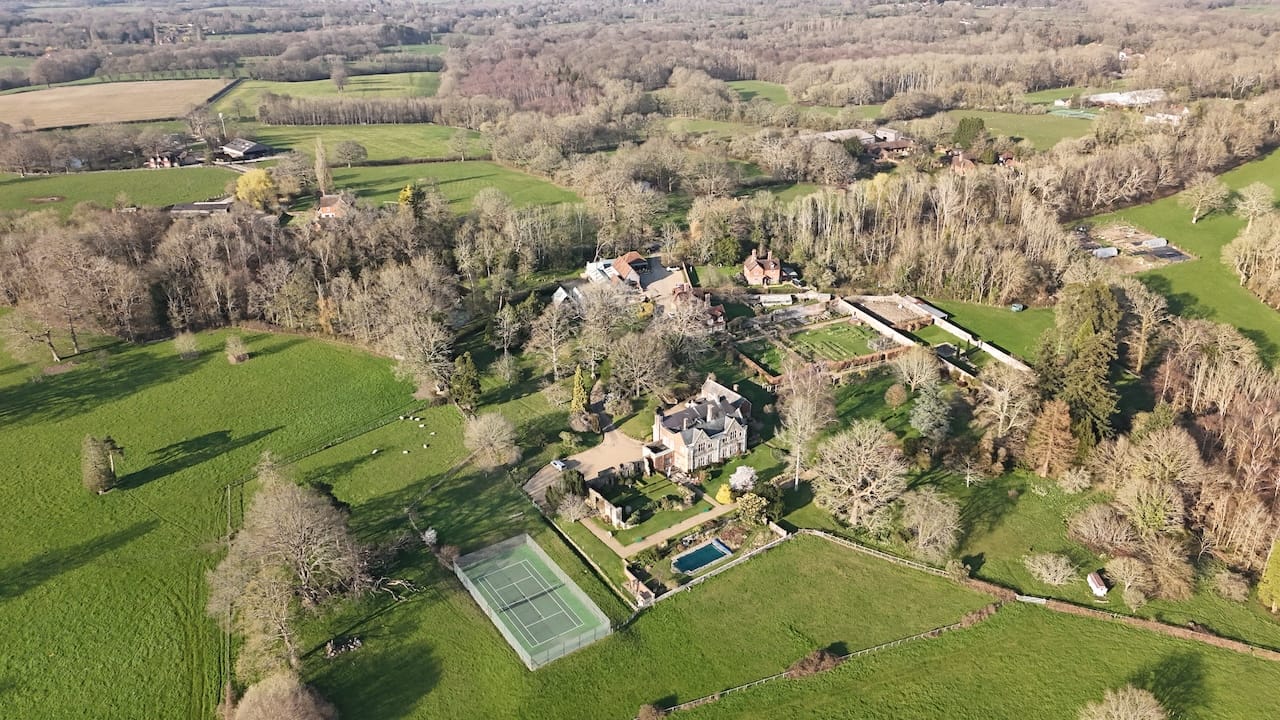
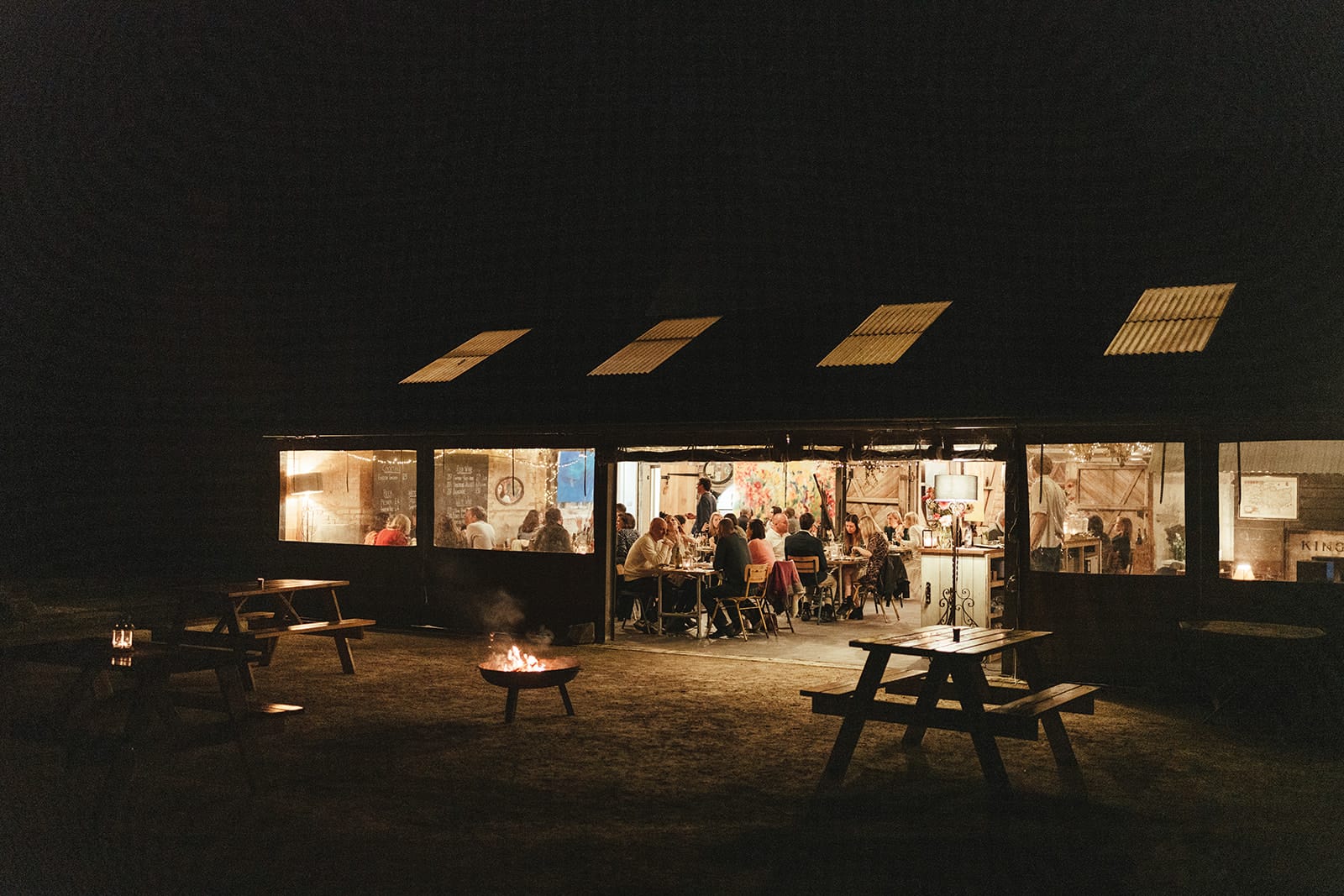
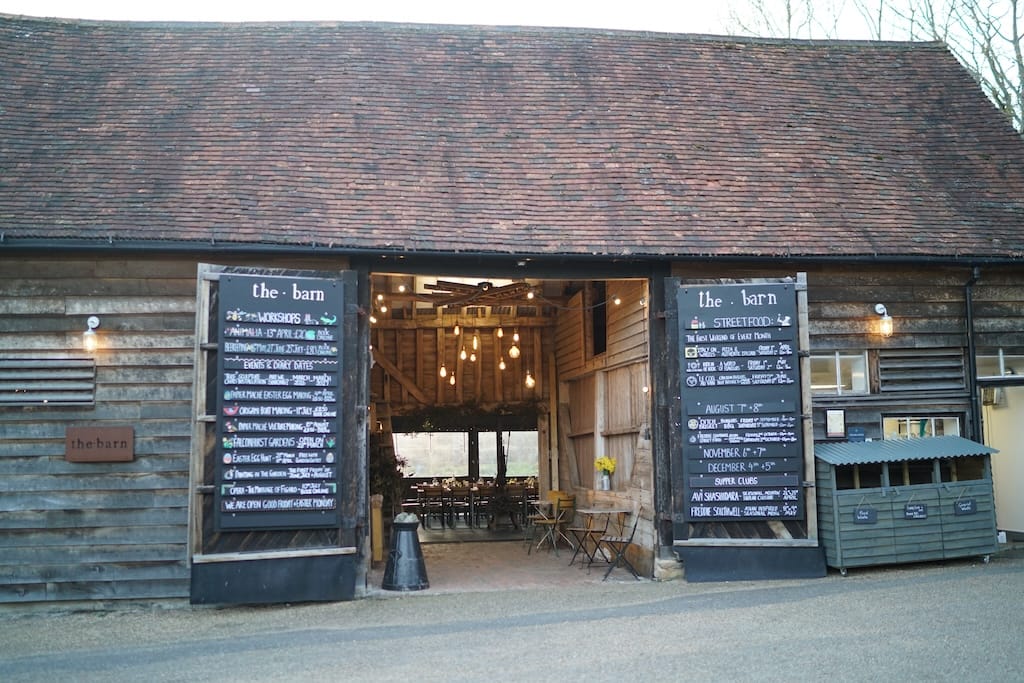
But none of these are silver bullets.
“The shop and events aren’t huge money makers,” George said. “But they employ people… and they help afford my time.”
That’s a subtle but important distinction.
Diversification here isn’t about replacing farming. It’s about supporting it — spreading risk, smoothing the peaks and troughs, and allowing the business to think longer term.
“I think it’s made us more resilient,” he said. “If one part has a bad year, something else can help carry it.”
Still, there’s a sense that the model isn’t quite complete.
George talks about the idea of a “golden ticket” enterprise — something that could transform the economics of the farm. But in the same breath, he questions whether that’s realistic.
“I think it’s more likely an accumulation,” he said. “Lots of things contributing a bit more.”
That feels closer to the truth here. Not a single breakthrough, but a gradual layering — farming, food, people, place — all adding up.
A farm in conversation with its landscape
There’s a strong sense, walking the estate, that Falconhurst is trying to reconnect its parts.
The farm produces food, but not enough of it flows through the farm shop. Visitors come to the shop, but often don’t see the farm. Events happen, but they don’t always draw people into the wider landscape.
“There’s more we could do to link it all together,” George says.
That might mean more produce coming directly from the farm into the shop. Or opening up access — educational visits (they did Open Farm Sunday last year and are planning on doing it again this year), foraging, experiences that bring people beyond the immediate retail space.
It’s not a new idea, but it’s one that feels increasingly necessary. Because around here, the pressure isn’t just economic — it’s spatial.
Falconhurst sits within the High Weald National Landscape, where development is tightly controlled. Options for change are limited. Decisions carry long-term consequences.
“You’re thinking 15–20 years ahead,” George said. “And working out what Plan B or Plan C looks like.”
That might include a great diversity of livestock or more diversification. It might include nature-based income streams. Or it might simply mean refining what’s already here.
Like many farms, Falconhurst is being pulled into conversations around natural capital, biodiversity net gain, and rewilding.
But George approaches it cautiously.
“A lot of it feels like a 30-year commitment,” he said. “And I don’t think I’ve been here long enough to make that decision.”
Holding it all together
This isn’t a farm chasing trends, nor retreating into the past. It sits somewhere in between — trying to make things work in a way that feels practical.
It’s a business holding several moving parts: an organic dairy, a diversified estate, growing public access, and a longer-term view of the landscape.
Beneath that sits a question many farms are working through: what does resilience actually look like in practice?
At Falconhurst, there isn’t a single answer.
It shows up in the herd — bred to suit the land.
In the contract agreement — open and workable.
In the shop, the events, the people — each playing a part.
And in the willingness to keep adapting.
“I quite enjoy the challenge,” George said. “Everything’s different… and you’re forced to think differently to make it work.”
That feels close to the point. Not certainty, or a fixed model — just a readiness to adjust.
A farm, and an estate, still finding its shape.
About the series
This article and accompanying short film form part of a twelve-part Indie Farmer series, supported by the Lund Trust and the High Weald National Landscape. The series explores how farmers across the High Weald and surrounding areas are adapting their businesses, managing land, and navigating the realities of modern agriculture.